27/10/1854 –10/06/1925
Born in the Punjab, Colonel of Bengal Lancers, fought in Afghanistan, Burma
Relatives
Research:
Alexander MacWhirter Renny was born on 27th October 1854 far from Berkhamsted where he now lies buried in Rectory Lane Cemetery. He was born in the Punjab, India. He was the third child of George Renny and Flora Renny (nee MacWhirter).
Shortly before Alexander’s third birthday in 1857, resentment amongst native troops serving in the Bengal presidency of what was then the army of the Honorable East India Company boiled over, ostensibly over the greasing of rifle cartridges with the fat of cows and pigs. This offended religious sensibilities; cows were sacred to Hindus and the pig unclean to Muslims. The Indian Mutiny broke out. Alexander’s father was serving as a Lieutenant in the Bengal Horse Artillery and took part in the campaign to suppress the mutiny. He did so with great distinction, winning the Victoria Cross on 16th September 1857 at the siege of Delhi.
“On 16th the arsenal was captured but the rebels set fire to some thatched houses outside and took up covered positions from where they could fire at anyone trying to put the fire out. Lt Rennie [sic] of 5/1 climbed on to the wall of the arsenal, was handed 5 ½ inch mortar shells with lighted fuzes by two assistants and threw them among the rebels with such effect the neighbourhood was speedily cleared. He received the Victoria Cross for his exploit’ (Bengal Horse Artillery, 1800-1861, Maj. Gen. B.P. Hughes).
Alexander’s father survived the Mutiny and went on to become a Major General.
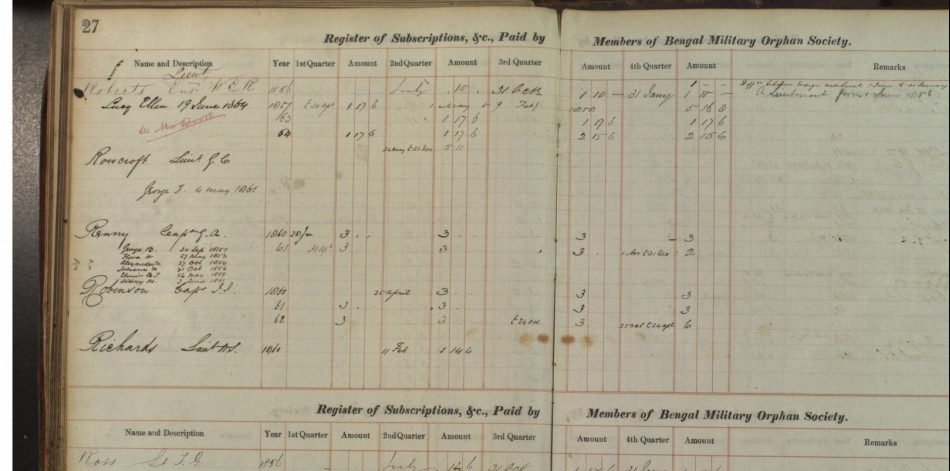
Alexander’s father was a member of the Bengal Military Orphans Society. The Society provided a form of insurance for the children of members in the event of those children being orphaned by the death of their parents. Members paid a subscription and the society undertook to educate the children of any member who became orphans. Given George’s activities in the Mutiny this was probably a prudent precaution on his part. The records for the Society disclose he paid £3 quarterly for Alexander and his siblings; George, born 24th September 1851; Flora, born 27th May 1853; Alexander, 27th October 1853; Juliana, 21st October 1856; Eleanor, 26th May 1859 and Sidney 4th June 1860.
Baptismal records tell us Alexander was baptized on 23rd February 1855 at Meean Meer in Bengal.
The 1861 census reveals that the family was then on leave from India, visiting Scotland and were staying at Georgefield, Lilliput Lane, Leith, Midlothian. Alexander’s father had been promoted to Captain and Brigade Major, Bengal Horse Artillery.
By the time of the 1871 census Alexander aged 16 was back in Britain. He was living in the household of James and Georgina Dunbar to whom he was nephew. He was here to be educated. He entered Cheltenham College in August 1870 and studied there for two years.
From Cheltenham he went on to the Royal Military Academy, Woolwich, where officers of the Royal Artillery and Royal Engineers were trained. Following in his father’s footsteps, he was commissioned as a lieutenant and given his first command in the Royal Artillery, Bengal, on 11th September 1873. This was no longer the army of the Honorable East India Company. In 1861, following the Mutiny, the British Government had taken over governance of India and the army and the days of “John Company” had ended.
Alexander was appointed to the Indian Army on 24th January 1878. The Indian Army Lists allow us to follow his career in India in some detail. He was first appointed to the Bengal Staff Corps. He passed his staff college final examination and was “qualified for tactical fitness for command.”
As an officer commanding Indian troops he would have been fluent in the native tongue. He was also a recognised Russian linguist. This might seem a somewhat odd achievement for an officer serving in India, but during the latter part of the 19th Century political and diplomatic tensions ran high between Russia and British India. Each vied with the other for control of the region and in particular the intervening lands of Afghanistan, Bhukara and Northern Persia. Britain feared that Russian expansion in the region could lead to Russian troops invading from the north and snatching India – the jewel in the crown of the Empire. This was “The Great Game” and the ability to speak Russian would have been a useful talent to a player of that game.
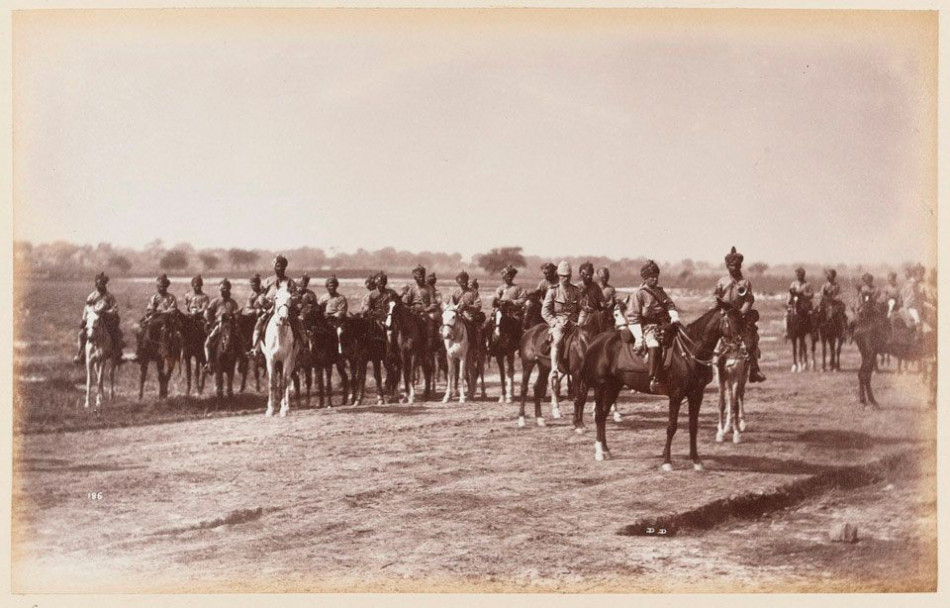
In July 1880 Alexander transferred to the 7th Bengal Cavalry. This was the regiment with which he was to serve until his retirement.
He took part in the Second Anglo Afghan War of 1879 -1880 including participation in the Zaimukht expedtion to punish tribesmen for the murder of a British officer. He was decorated with the Afghan campaign medal.
The recent involvement of British Army in Afghanistan in 2000-2004 is nothing new. The First Anglo Afghan War was in 1939 and there was to be a third in 1919. One might expect the Afghan tribesmen to have been no match for the Indian and British armies, but they proved to be fierce and doughty opponents. The British forces in the First Anglo Afghan war were wiped out with only one man making it back to the safety of India. It was not for nothing that Kipling wrote:
“When you’re wounded and left on Afghanistan’s plains,
And the women come out to cut up what remains,
Jest roll to your rifle and blow out your brains,
An’ go to your Gawd like a soldier”.
In 1885 Alexander was promoted to captain and given the command of a squadron. The regiment saw active service in Burma 1886-1887 and Alexander won another campaign medal. Burma proved to be far from ideal country for cavalry to operate in and most of the regiment’s actions involved the storming of defended stockades on foot.
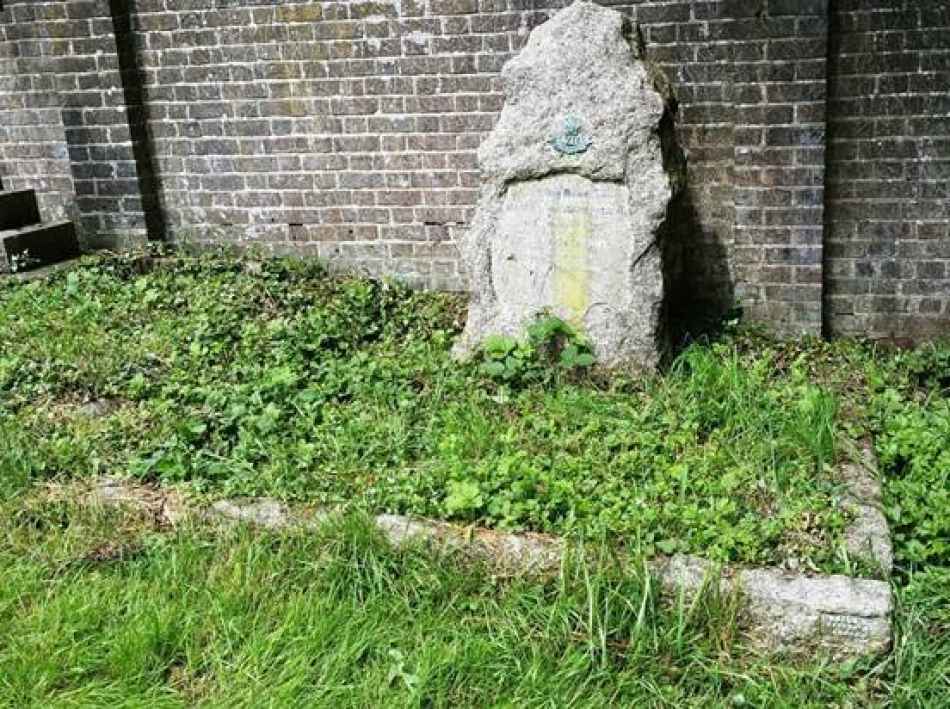
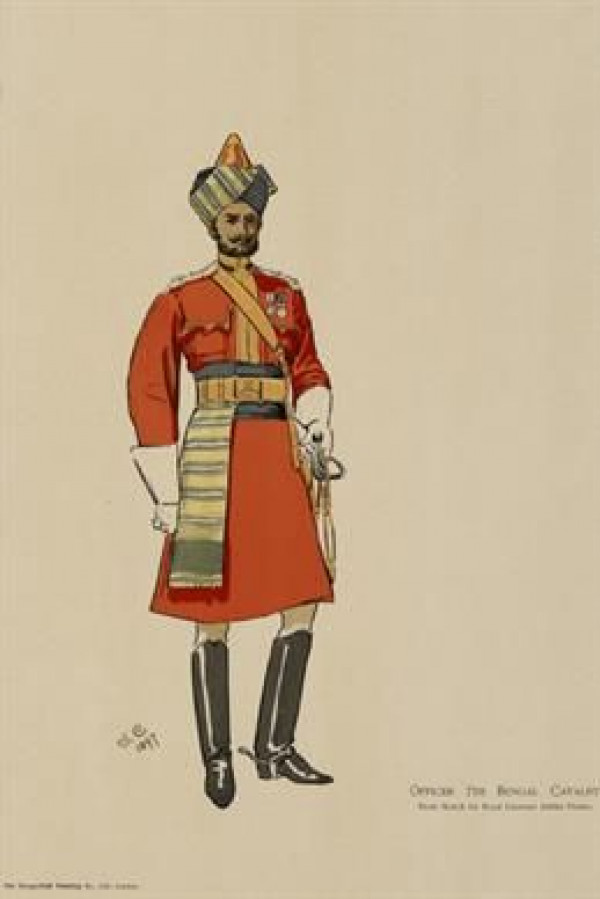
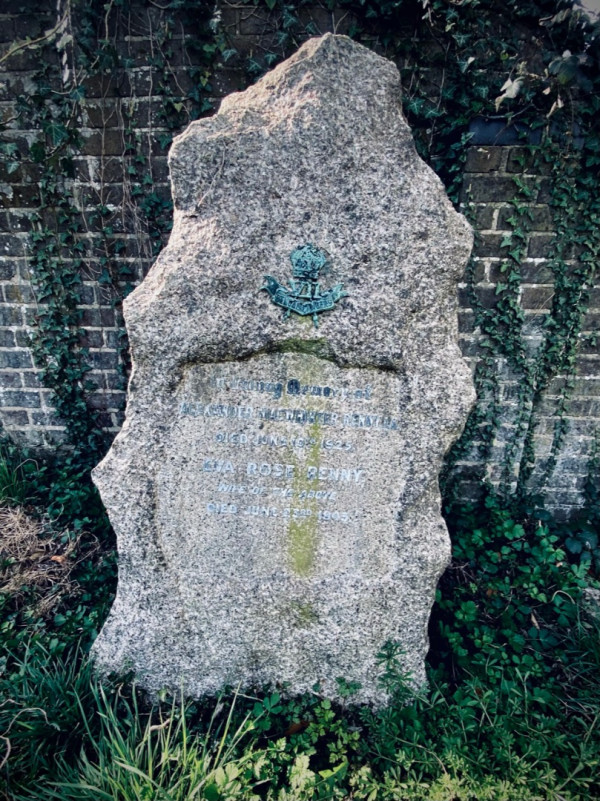
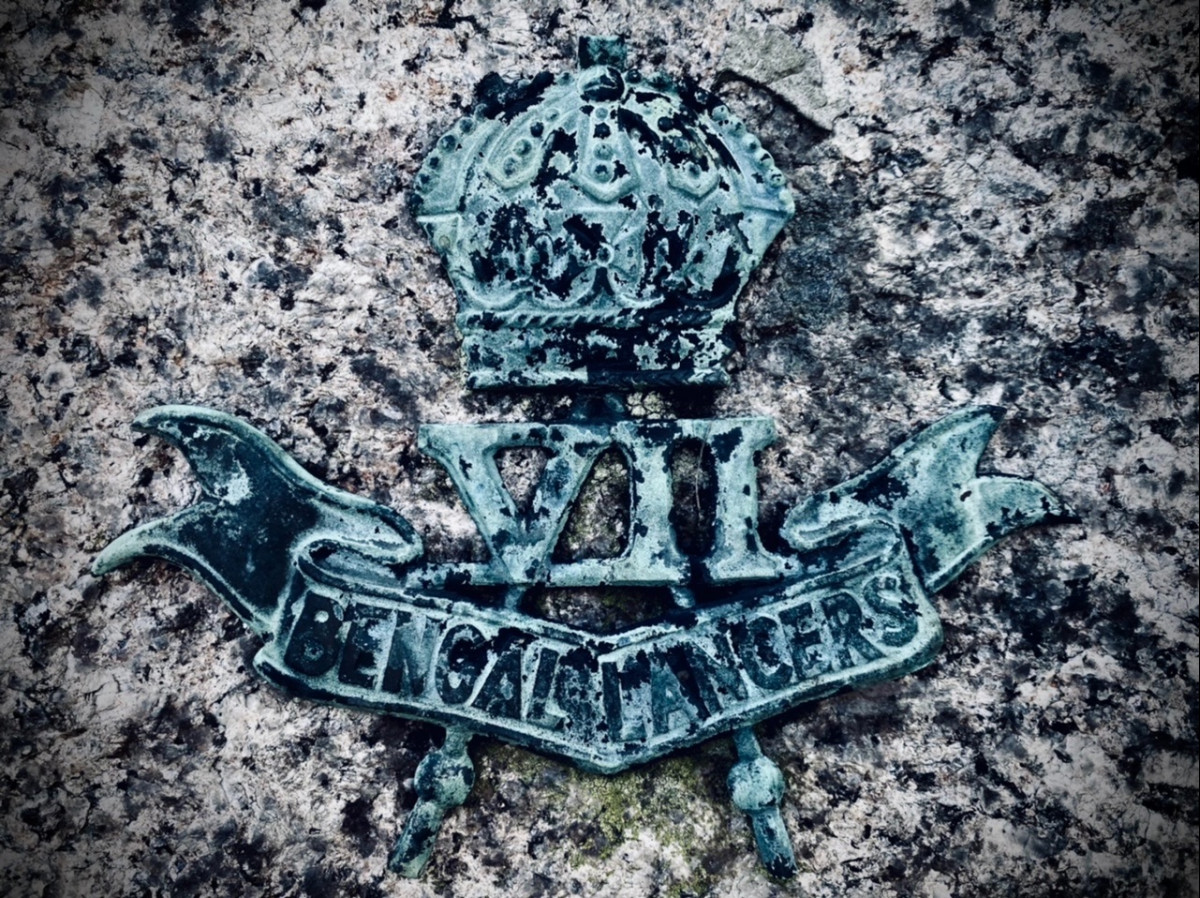
On 17th December 1896 Alexander, then a Lieutenant-Colonel, was appointed commandant of the regiment, which in 1901 changed its title to that of the 7th Bengal Lancers. It is the badge of the regiment in this incarnation that appears on Alexander’s grave stone in Rectory Lane cemetery.
Alexander was promoted to full Colonel on 11th September. He retired from command of the regiment and the Indian Army on 17th December 1903 at the age of 49.
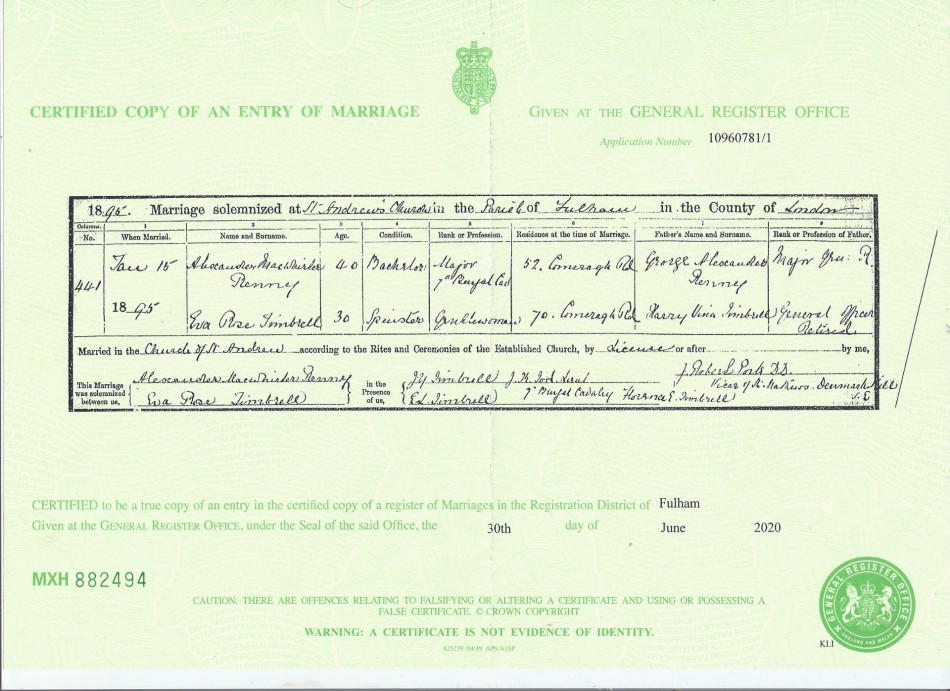
In early 1895 he married. His bride, Eva Rose Timbrell, was also from an British family in India. She had been born in the Central Provinces on 27th February 1863. He was then 40 and she was 30. Their first child, a daughter, Ellen Juliana Renny was born and baptized at Mussorie, Christ Church Bengal. Two further children were to follow, Alexander Timbrell Renny in 1904 and Rose Christine Renny in 1905.
Upon Alexander’s retirement the family moved to Britain and the 1911 census reveals that the family took up residence in Cheltenham and Alexander appears on the electoral roll for Cheltenham in 1913 and 1915.
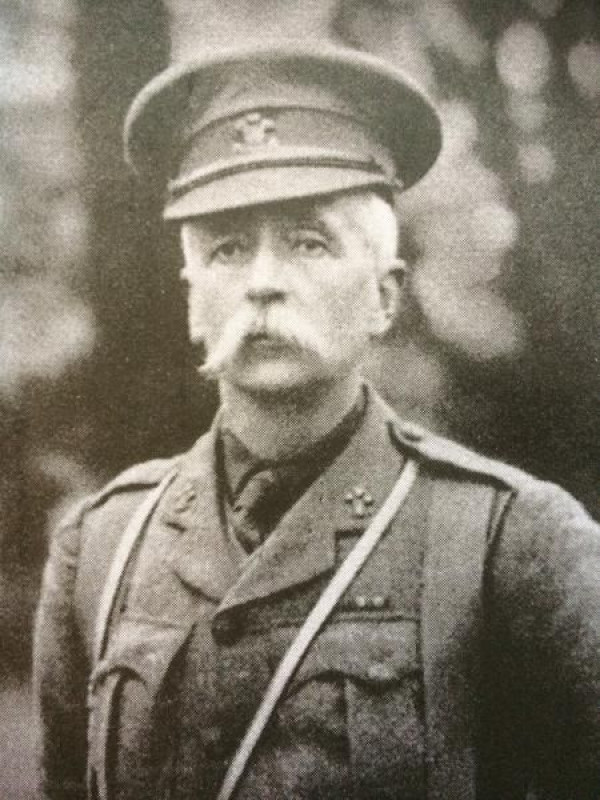
Alexander had probably thought his soldiering days were behind him, but in August 1914, only two months before his 60th birthday, he returned to the colours. He was given the rank of Lieutenant Colonel and command of a territorial battalion, 1/15th London Regiment (Prince of Wales Own Civil Service Rifles).
The battalion was initially stationed on the Strand, but moved to Bedmond and latterly in November 1914, Watford. In March 1915 it embarked for France. The London Regiment history recounts that Alexander introduced an air of professionalism to the battalion and that there was a genuine affection for him. He remained in command only until July 1915. He came back to England on leave, but was hospitalised and his soldiering days were over for good.
“Colonel Renny … did not return from leave, as he was detained in hospital in England. As Commanding Officer, he was very popular with all ranks, and for his age his energy was marvellous. The Battalion was very sorry to lose its “little Indian Colonel” as he was called. The men felt they would miss him most in the front line, where it was a very familiar sight to see him wandering around, indifferent to danger or discomfort…”
He was awarded the Silver War Badge to which servicemen who had been honourably discharged for ill health were entitled.
Alexander and Eva lived in London after Alexander’s return from France. However, he appears on the electoral roles for Berkhamsted from 1920 -1925. He died on 10th June 1925, his address being Whiteleaf, Montague Road, Berkhamsted. (No property named Whiteleaf is to be found in Montague Road today.) His estate was valued for probate at £7,055 19s 10d.
Why did the Rennys move to Berkhamsted? Their eldest child Ellen married a Francis Priestland who lived in Berkhamsted, but that was not until 1924. She presumably moved here with her parents in 1920 (she would then have been 20 years old) and met Francis after moving to Berkhamsted. None of which answers the question as to why the family settled in Berkhamsted, having no apparent earlier connection with the town. Perhaps Alexander had visited the town whilst the 1/15th London Regiment was in Bedmond or Watford preparing for war? There was a Voluntary Aid Detachment “V.A.D.” Hospital set up in Barncroft (now the Beeches in Lower kings Road and part of Berkhamsted School) during the First World War. Was that perhaps the hospital to which he was admitted on his return from France in 1915?
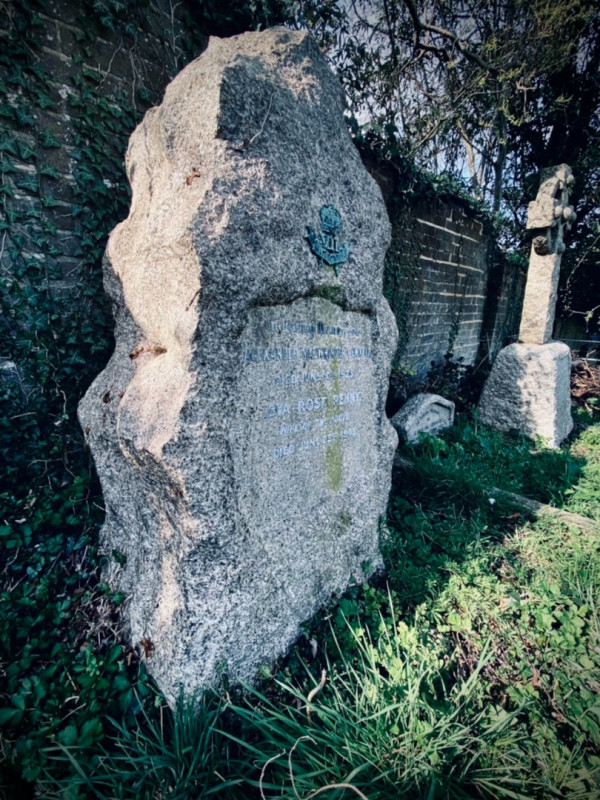
Whilst we can now only speculate as to why Alexander settled in Berkhamsted, he remains here today buried in Rectory Lane cemetery. The gravestone is not only unique within the cemetery in being adorned with the badge of an Indian Army Regiment, but the design of the stone itself is also unusual. Rather than a conventional gravestone, or cross, it takes the form of a naturally shaped rock on which Alexander and Eva’s names and dates of death are displayed, surmounted by the regimental badge of the 7th Bengal Lancers. This gravestone was supplied by G. Maile & Son Ltd, which was based on the Euston Road in London, the business being that of “Church furnisher, and dates of death sculptor.”


 View burial


 Personalities of the Past
 The Fallen of WWI in Rectory Lane Cemetery
 Memorial Symbolism
