1841 –03.1909
Daughter of middle class family who fell pregnant before marriage and thereafter lived in poverty
Relatives
Research:
EMMA DOLLING; 1841 – 1909
Emma was born in Berkhamsted in 1841 and baptised on the 28th March that year. Her parents were John and Laura Lismer. Emma was one of nine children born to John and Laura.
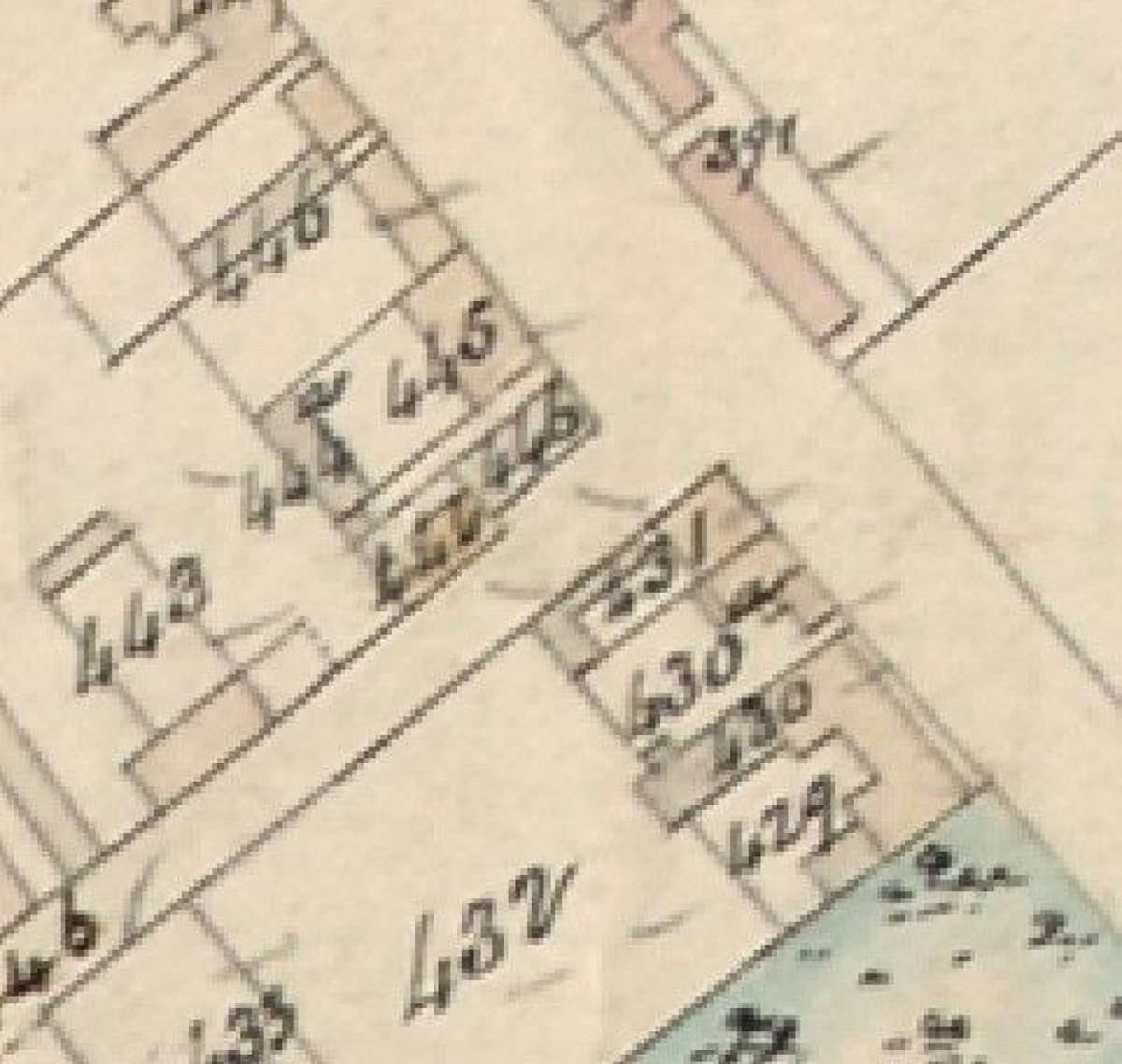
Considering that Emma spent most of her adult life living in poverty, it is perhaps surprising to learn that the Lismer family were “middling men,” what we today would call middle class. John was noted as being a shopkeeper in the census of 1841 and we learn from the 1851 census that he was a grocer living in Bank Mill, Berkhamsted. The 1839 Tithe Map reveals that John owned 3 cottages in Bank Mill. Emma’s grandfather, William Lismer, a farmer, owned four cottages and a beer shop, and another family member, Joseph Lismer, owned 11 cottages and a blacksmith shop. How did Emma in later life end up living in overcrowded and squalid conditions of poverty?
The answer may well be found in the fact that when Emma married in the first quarter of 1861, she was heavily pregnant. She gave birth to her first child, Henry, shortly after her marriage. When the 1861 census was taken on 7th April, Emma, and Henry, then one month old, were staying with the Reading family. The Reading family lived in Redbourn, near St Albans. Emma’s husband, Edwin Dolling, was the Reading’s nephew and he had lived with the Reading family in 1851. Henry’s birth was registered in St Albans, so it looks likely that Emma was staying with the Readings when Henry was born. Confusingly, whilst Emma’s surname is given as Dolling on the census, she is noted as unmarried although she had married sometime between 1st January and 31st March 1861.
The 1861 census also notes Emma’s occupation as that of domestic servant. Edwin was not with Emma or the Reading family when the 1861 census was taken. He was in Hemel Hempstead where he worked as a stableman. Was Emma a servant for the same family that Edwin worked for as a groom? We cannot know for certain, but if so, that may explain how she and Edwin met.
However, Emma and Edwin met, the fact that she fell pregnant whilst unmarried would have been considered a moral failing on her part and social disgrace. Illegitimacy had always been stigmatised in English Society. Poverty and illegitimacy were considered moral issues. The Poor Laws of 1834 were designed to restore virtue. The new law absolved the putative father of responsibility for his child, but punished the mother socially and economically in an attempt to restore female morality.
Family and friends could not be depended upon. If a young woman became pregnant whilst living at home, she was often forced to leave in disgrace and move to somewhere she was not known. This may explain why Emma was staying with the Reading family in Redbourn when Henry was born. Pregnant and unmarried, Emma would certainly have lost her position in service. Many unmarried mothers ended up in the workhouse as the only place available to them to give birth.
Many had little option but to give their children up. During the 19th century, about 4,500 women handed their children over to the London Foundling Hospital alone. (The Foundling Hospital moved to Berkhamsted where a new founding hospital was built and opened in 1935 and which today is Ashlyns School).
Others resorted to baby farms. Advertisements were common in newspapers of the time such as the following:
“NURSE CHILD WANTED, OR TO ADOPT — The Advertiser, a Widow with a little family of her own, and moderate allowance from her late husband’s friends, would be glad to accept the charge of a young child. Age no object. If sickly would receive a parent’s care. Terms, Fifteen Shillings a month; or would adopt entirely if under two months for the small sum of Twelve pounds.”
Professional baby farmers looked to take on sickly infants or infants under two months as the deaths of such children would appear more natural. The children were adopted for a fee and the baby farmer looked to get rid of them as quickly as possible in order to maximize their profits. Infants were often kept drugged on laudanum, and fed watered down milk laced with lime. They quickly died of thrush induced by malnutrition and fluid on the brain due to excessive doses of strong narcotics. The costs of burial were avoided by wrapping the naked bodies of the dead infants in old rags and dumping them in a deserted area.
In July 1870 the newspapers carried reports of a Mrs Waters of Brixton who had drugged and starved some 16 infants, wrapped their bodies in newspaper and threw them on deserted streets. Efforts were made to put a stop to the practice, but it was still rife in the 1890s. Another egregious case was that in 1896 of Mrs Dyer of Reading. She had been admitted to mental institutions on a number of occasions but was still able to take infants in for a fee. She was apprehended when caught throwing the bodies of babies she had strangled into the river Thames.
Eventually Parliament legislated to criminalise baby farming. The Infant Protection Act 1897. charged local authorities with the duty to seek out baby farms and lying-in houses, to enter homes suspected of abusing children, and to remove those children to a place of safety. No infant could be kept in a home that was so unfit and so overcrowded as to endanger its health, and no infant could be kept by an unfit nurse who threatened, by neglect or abuse, its proper care and maintenance.
Unmarried mother might themselves resort to infanticide. The problem was particularly acute in London where it was easy to conceal the death of an infant in the anonymity of the city. The Central Middlesex Coroner claimed in the 1850s that 12,000 children had been murdered by their mothers.
Emma, disgraced, probably having lost her family, employment and facing a life of poverty, was fortunate in that at least Edwin married her, and she was able to keep Henry (and indeed go on to have more children).
In 1871 she and Edwin were living in Berkhamsted in Bridge Street near the canal. By 1871 Emma had given birth to four children in addition to Henry and she was to go on to have nine children in all. Edward was working as a labourer in 1871 and Emma, like many working-class women of that time in Berkhamsted worked as a straw plaiter. Straw-plaiting was a profitable cottage industry for women and girls in Victorian times, supplying plaited straw to the hat makers of Luton and Dunstable. The craft was passed on from generation to generation and children were sent to dame schools to learn the craft. Children started straw plaiting at the age of 5. The work was well paid, “…it was a profitable occupation and in the first half of the 19th century many women and children earned more than men who laboured in the fields. A good hand at Berkhamsted could earn about 15s a week-then a handsome wage-…Farmers complained that straw plaiting “did mischief, making the poor saucy, rendering the women adverse to husbandry and causing a dearth of indoor servants and field labourers” (P.Birchtnell)
In 1873 Emma was mentioned in the Bucks Herald in connection with evidence she gave at the inquest of a suicide, Mary Reading from Chesham. Emma went to the aid of Mary’s daughter whom Mary had thrown in the canal before jumping in herself and drowning. Fortunately, the little girl survived
In 1881 the Dolling family were no longer living in Bridge Street, having moved to Red Lion Yard. Later that same year Edwin died, leaving the widowed Emma with the care of their children. Emma and three of her children were still living in Red Lion Yard in 1891.
The Red Lion Public House stood on Berkhamsted’s High Street until it was closed in the 1870s. It stood on the site where HSBC Bank stands today. To the side of the pub was a gateway which led into Red Lion Yard. Percy Birtchnell, writing in 1975 as “Beorcham” in the Berkhamsted Review noted that there had been as many as 18 cottages in the yard which were rented to several families. Amongst these were small cottages erected on garden ground. Four had been stables and others wooden houses on the property. Conditions were overcrowded and insanitary. In 1911 there were still 15 cottages in the Yard, housing 77 people.
In 1886 four houses in the Yard were reported as “filthy and dilapidated and quite unfit for human habitation”. That same year the Sanitary Authority inspector reported that several houses in the yard were overcrowded, and orders were made to abate the overcrowding. One of those houses was Emma’s.
“The Inspector reported several houses in Red Lion Yard, Berkhampstead, as being over-crowded, and orders were made in the cases of Thos. Belcher, George Kingston… and Emma Dolling to abate the overcrowding.” (Bucks Herald, 1886.)
With the inhabitants living in such cramped and filthy conditions, it is not surprising that arguments and fights often broke out. Emma was the victim of one such incident.
“ASSAULT
David Belcher, Red Lion Yard, Berkhampstead was charged with assaulting and beating Emma Dolling on August 9th. Complainant said she and two others were talking at her door at 11.30 p.m. and defendant put his head out of the window and asked them to be quiet. She asked him to pay the 1s. she lent him and he came down and struck her in the face saying “There, I’ve paid you now.” Defendant was fined 1s. and 14s costs. In default 7 days; 14 days allowed for payment.” (Herts Advertiser, 1884)
Emma’s oldest son, Henry worked as a brushmaker, as did his brother William. Another brother, George was a labourer and the oldest daughter, Louisa, 14, was a straw plaiter.
It was usual for children of poorer families to be put to work at an early age to supplement the family income. It was not until the introduction of the Elementary Education Act of 1870, known as the “Forster Act” after its sponsor, William Forster, that education for children between the ages of 5 years and 10 years, became compulsory. It was later extended to 13 year olds. Many poorer parents were opposed to compulsory education, as it meant that children who otherwise might have been in gainful employment earning an income for their families had to attend school, a view which Edwin seems to have shared judging by reports carried in the Bucks Herald.
“Edwin Dolling, Canal Side, was charged with not sending two boys to school. – He said he often wanted the boys to help him. – The Chairman said he could very well send them as half timers making at least ten hours a week; They did that, he believed at Mr Read’s – Defendant said he would most happy to let them do that- He was ordered to pay the usual costs” (Bucks Herald 1873)
Edwin, despite his comment that he as happy to let the children attend school half time was nevertheless charged again the following year. This time he did not attend court himself but sent Emma along instead.
“Edwin Dolling was charged with not sending two boys, William and George to school – Mrs Dolling appeared and said that William was 13 years old the 7th last month and exempt. She had sent the other boy to school and did not know until Saturday that had not been regularly. – A fine of 2 s in this case was also inflicted.” (Bucks Herald 1874)
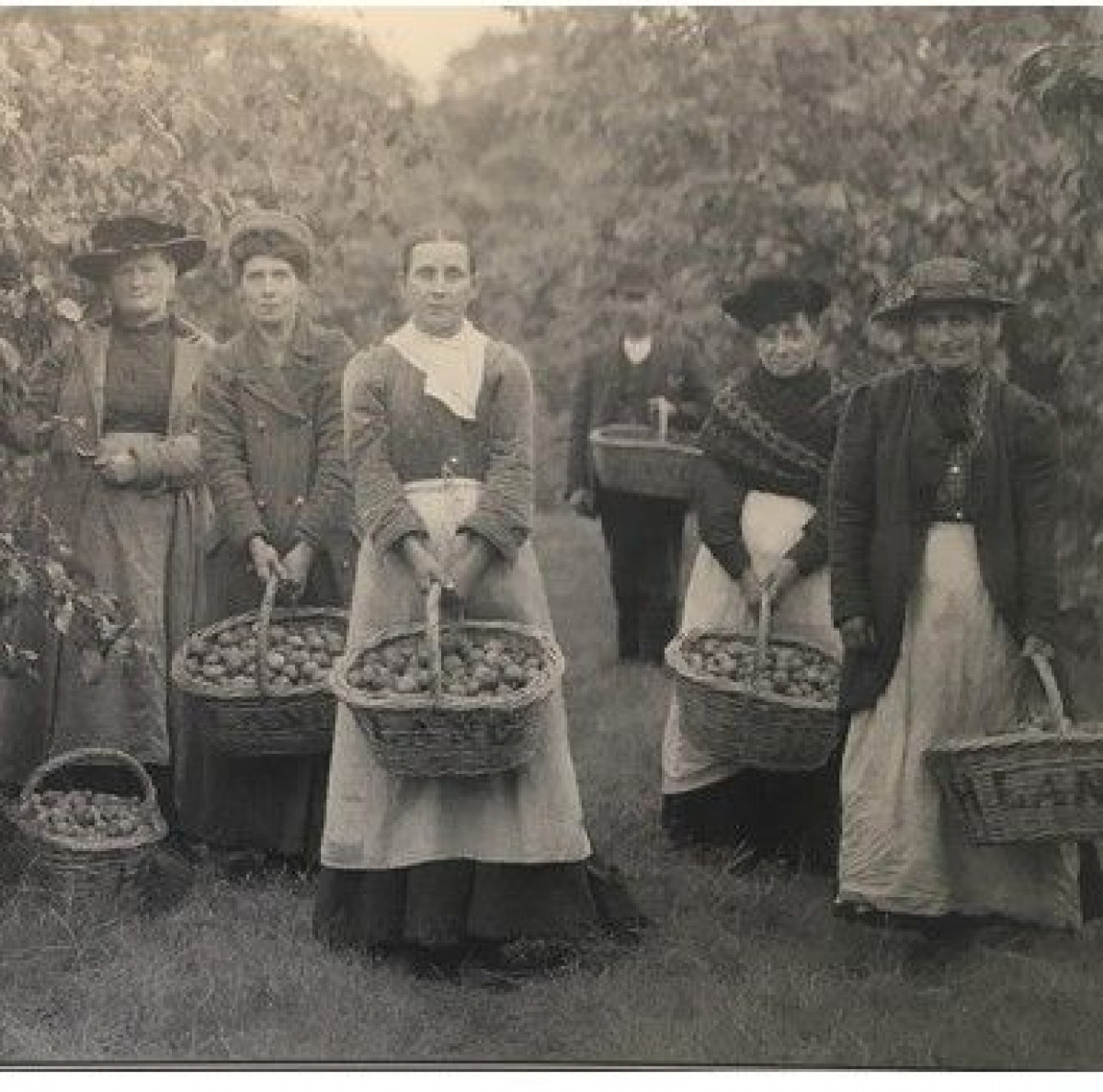
Emma supplemented the income she made from plaiting straw by taking up seasonal work as a fruit picker at Lane’s nursery. Once the fruit harvest had been gathered in, it was the practice of the Lanes to organise a social gathering for the fruit pickers with tea and music provided by Mrs Lane and her daughters. We learn that Emma was present on the occasion of the 1891 social event and “…a very pleasing presentation of a neat little egg and spoon stand was made to Mr and Mrs Lane by Mr Hallett, the Kitsbury foreman and Mrs Dolling on behalf of the employees.” (Bucks Herald 1891).
Fruit pickers were not employed on a permanent basis. They were seasonal workers who were only taken on at Harvest time. Lane’s Nurseries did employ permanent staff to work in the nurseries all year round but took on additional workers when the fruit was ready to be harvested. As referred to above, in 1892 Lane’s had 100 permanent staff, but generally took on a further 100 or so seasonal workers when the fruit was ready to be picked.
Such seasonal workers were predominantly women. The Victorian view was that women could and should be supported at home. It was the men who took up permanent employment “As a result, working-class married women formed an army of casual workers; chars, washerwomen, harvesters, and fruit-pickers, outworkers, the most exploited section of the whole economy.” (Worlds Between. Historical perspectives on gender and class,” – Davidoff, L. 1995)
In addition to the work only being available at harvest time, fruit pickers were pieceworkers, that is to say they were not paid a wage such as would be paid to a permanent worker, but they were paid according to the amount of fruit they picked.
It was common practice for fruit pickers to be given tokens for the fruit picked. Such tokens, made of brass or even cardboard, would then be presented by the worker to the employer in exchange for money to the value shown on the tokens.
By the time of the 1901 census, Emma had escaped from Red Lion Yard and was living with her one of her sons, Ernest, and his family in Middle Road. She died in March 1909 at the age of 68.


 View burial


 Personalities of the Past
 Memorial Symbolism

 Military graves