21/11/1818 –09/01/1882
Gardener, Caretaker of the Town Hall and school beadle
Relatives
Research:
JOHN TIMSON; 1818 – 1882
John was born on 21st November 1818. He was the seventh of twelve children born to John and Mary Timson who lived at 204 High Street, Berkhamsted. John was baptised in St Peter’s church on the 24th January 1819.
The next record we have for John is the registration of his marriage to Lydia Berry. Lydia was originally from Hayes in Middlesex and we do not know how she and John met, but they were married in Berkhamsted in the second quarter of 1841, shortly before the census was taken that year and we find in the census John and Lydia living together in Albert Place, Berkhamsted. Albert Place had originally been known as “the Pightle” but underwent several name changes. It became Albert Place in 1841 and Prospect Street in 1851 before becoming known as Highfield Road, the name by which it remains known today. We learn from the census that Lydia was five years older than John; his age is given as 20 and Lydia’s 25. John was noted as being a labourer. John’s younger brother James, also a gardener, was to marry Lydia’s younger sister Emma in 1852.
By 1851 John and Lydia had moved from Albert Place and were living in the High Street. The 1851 census does not give us their address on the High Street, but as the entry relating to them is only three entries from others living in St John’s Well Lane, we can assume they were living not far from St John’s Well. John was then no longer working as labourer. He appears in the 1851 census as a gardener. His father John was also a gardener and worked for over sixty years at the Hall. It may be that John have found a position at the Hall through his father and worked alongside him in the grounds of the Hall. A possible alternative place of employment for John is Lane’s Nurseries, which were situated on the High Street by St John’s Well, close to where it appears John was living.
We also see from the 1851 census that John and Lydia by then had four children, all daughters, Ann, born in 1843; Lydia born in 1846; Emma, 1849 and Hannah who is noted in the census as being two months old. John and Lydia were to have six children in all. Another daughter, Mary, was born in 1854 and finally a son, William, born in 1857.
Ten years on, the family were still living in the High Street. John continued working as a gardener and all six children were still living in the family home with their parents. The two oldest girls, Ann, then age 18 years and Lydia, 15, were both working as dressmakers. The other children are all noted as being scholars.
By 1871 John was no longer a gardener. His occupation was “Town hall Keeper” and he together with Lydia and younger children, Emma, Hannah, and William were living at the Town Hall.
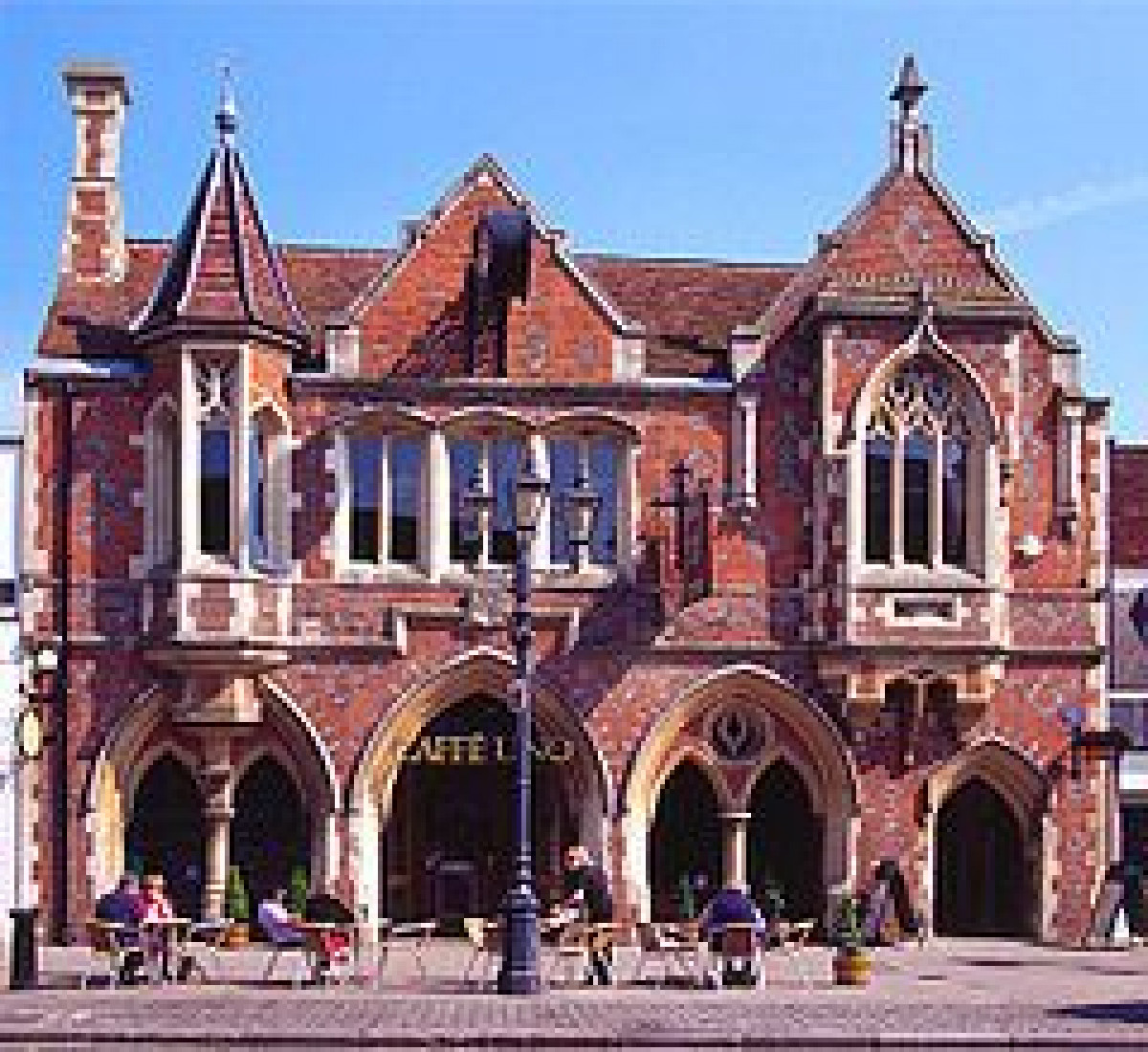
In August 1854 the old market house which had stood for 250 years burned down. There were many in the town who had thought it an eyesore and there was conjecture as to whether the fire was accidental or not. A meeting was held at the Kings Arms in February 1856 to discuss the provision of a new civic building “suitable for the increasing prosperity of the town.” William Hazell, a prominent grocer and pork butcher, offered a site for the construction of a suitable building. Monies were successfully raised by public subscription and the Town Hall, which still stands in the High Street today, was officially opened in August 1860.
In addition to his duties as caretaker of the Town Hall, the Bucks Herald noted in 1873 that John was appointed as school beadle, or attendance officer.
The Elementary Education Act of 1870, known as the “Forster Act” after its sponsor, William Forster, was the first of series of acts that made education compulsory for children initially between the ages of 5 years and 10 years, latterly increased to 13. Many poorer parents were opposed to compulsory education as it meant that children who otherwise might have been in gainful employment earning an income for their families had to attend school. As school beadle, it was John’s duty to deliver notices to the parents of non-attending children between the ages of five and thirteen years.
By the time of the 1881 census John was 62 years old. Lydia had died two years earlier in 1879. John was still living in the High Street, but no longer in the Town Hall as he was no longer caretaker there. He was described as a retired gardener. Whilst the census doesn’t give the number of the property in the High Street at which he was living, he was near Cornelius East’s timber yard (before it was moved to Gossom’s End) and we can therefore place him at the east end of the High Street (where, incidentally, the Hall was also located).
Although Lydia had died, John was not living alone. Living with him were three of his daughters, Emma, Hannah and Mary and also William. The three daughters, all unmarried, were dressmakers and presumably ran a dressmaking business between them from the property. William had graduated from wheelwright to become a coach body builder.
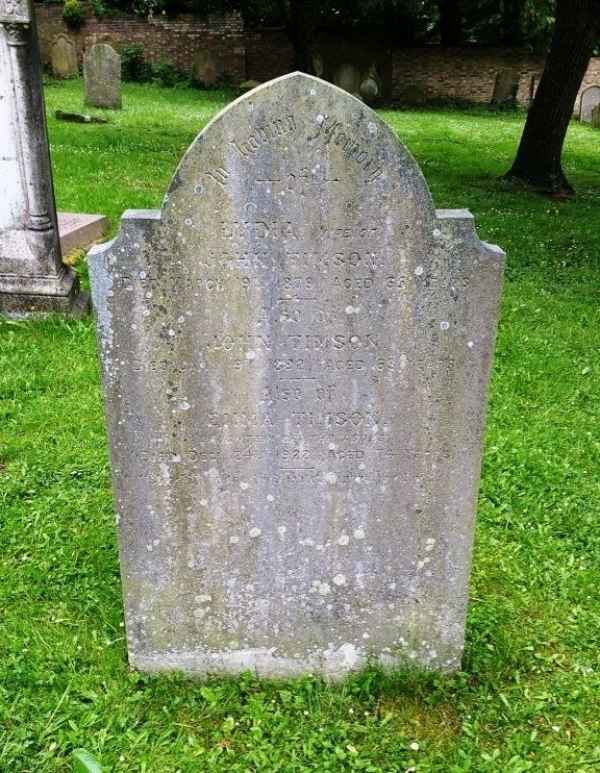
John may not have been in the best of health towards the end of his life. Whilst his father continued working as a gardener at the Hall until he was 76, we have seen from the 1881 census that at age of 63 John had retired and was no longer working. He was only to live for a just under a year longer, dying on 9th January 1882. He was buried in Rectory Lane Cemetery in the same grave in which Lydia had been buried when she had died in 1879.


 View burial


 Personalities of the Past
 Memorial Symbolism

 Military graves