1856 –12/03/1941
Fishmonger and resident of Castle Street
Relatives
Research:
HOSEA ABEL WARD; 1856-1941
Hosea, a Hebrew prophet, yet a curious and ill-omened name with which to burden a child, for the Hosea of the Old Testament was commanded by God, “Go, take unto thee, a wife of whoredoms and children of whoredoms,” a recommendation unlikely to lead to marital contentment. Yet that is the name with which Hosea was baptised on 3rd September 1856, although Percy Birtchnell writing in the Berkhamsted Review referred to him as “Dick” Ward, so that may be how he was colloquially known.
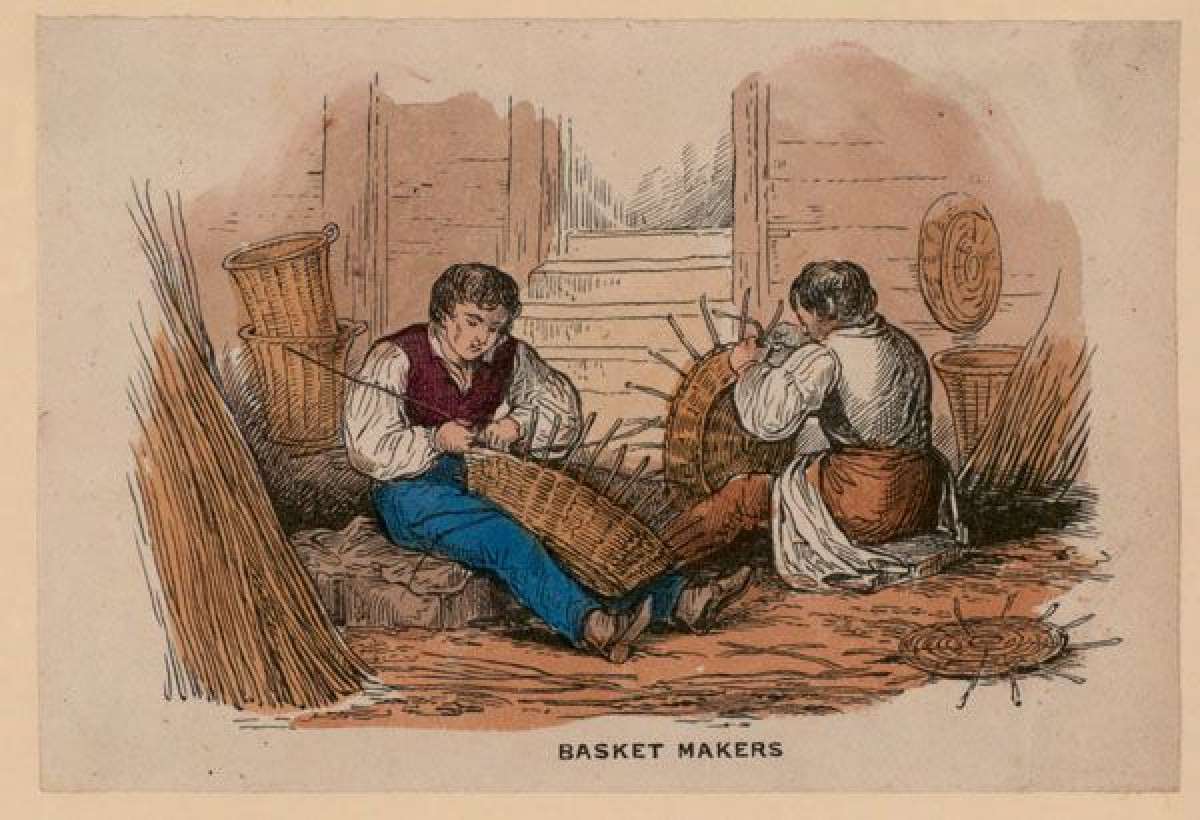
His parents were William and Emma Ward. Hosea was their second child and was born on 18th May 1856. His older brother, Walter, had been born two years before Hosea, in 1854. The family lived in Chapel Street in Hemel Hempstead. Like many poor families living in rural market towns, they made their living working in a small cottage industry; both William and Emma were basket makers. By 1871 the family had left Hemel Hempstead and settled in New Road, Northchurch. William continued to work as a basket maker, and the two boys, Walter age 16 years and Hosea, age 14 years, were then both also working alongside their father making baskets. Their mother, Elizabeth, had taken up another local cottage industry, that of straw plaiting, producing lengths of platted straw which were purchased by agents who sold the plaits on for use in the hat making industry in Luton. Straw plaiting was a popular occupation for poorer women and children whose nimble fingers could weave the straw lengths into various patterns of plait required by the hatmakers. It was such a popular occupation that dame schools were set up to train young children how to plait and sometimes they were taught in the dark so they could learn how to make the plaits without having to watch what they were doing. The work was well paid. Percy Birtchnell wrote in the Berkhamsted Review “…it was a profitable occupation and in the first half of the 19th century many women and children earned more than men who laboured in the fields. A good hand at Berkhamsted could earn about 15s a week-then a handsome wage-…Farmers complained that straw plaiting “did mischief, making the poor saucy, rendering the women adverse to husbandry and causing a dearth of indoor servants and field labourers.”
Hosea seems to have been a troublesome teenager. He first came to the attention of the courts in 1872 when at the age of 15 he was charged with stealing a fowl, the property of John Ashby. When Hosea appeared before the magistrates he claimed “…he caught the fowl in mistake among others…” He elected to have the case tried at the Hertfordshire Assizes on 8th April 1872. His defence did not convince the jury; he was convicted.
Two years later Hosea was back before the court. He, together with three others, were charged with trespassing on the common in search of conies. A keeper gave evidence; he said he knew Hosea and the others well and found them “…beating the furze and killing rabbits.” The keeper’s evidence was challenged on the ground that he was paid for the convictions that he obtained. The Bench thought there was no doubt. “The defendants could not have been hunting about the furze with dogs but for one object.” Hosea was fined £1.
If Hosea often found himself in trouble, his older brother Walter was little better. He enlisted in the army, joining the Hertfordshire Regiment in Hertford, but deserted in 1875.
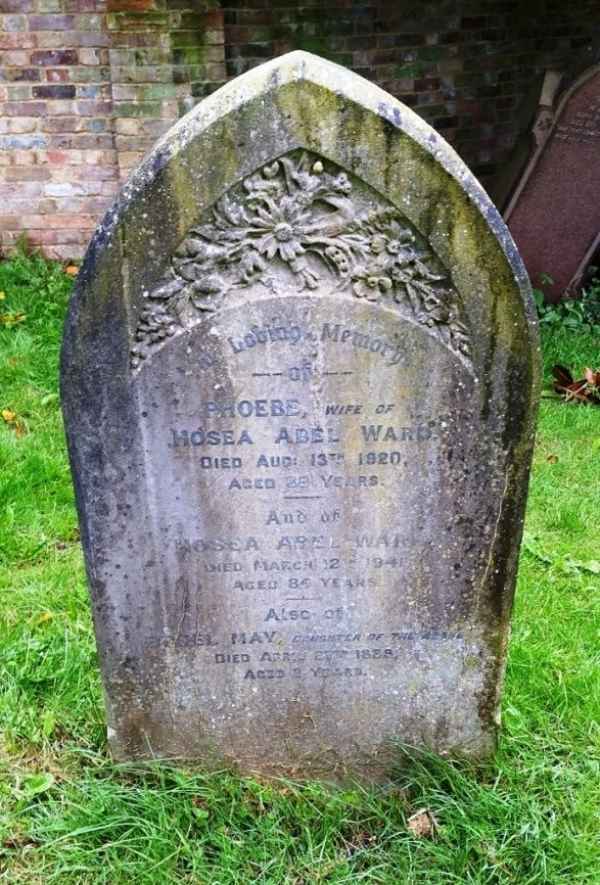
On 17th July 1876, at St. Mary’s church, Northchurch, Hosea married a local girl, Phoebe Bedford. Hosea was 20 years old and was working as a fishmonger. The following year the newly-wedded couple’s first child was born. Phoebe was to give birth to five children in all. Their first, a daughter, Florence Jane Ward was born in 1877, followed by Susan Emma Ward, born 1880; Edith Mary Ward, 1882; Walter William Ward, 1884 and finally Ethel May Ward, born in 1887. Ethel, the youngest daughter died on 27th April 1889 at the age of two years and was buried in Rectory Lane Cemetery where her mother and father were in turn to be buried with her when they died.
Following his marriage, Hosea and his family moved from Northchurch to take up residence in Castle Street. The family was certainly there by 1881. Phoebe, far from being the “wife of whoredoms” of Hosea’s biblical namesake, seems to have been a good influence on Hosea, at least initially. After his marriage he seems to have settled down to his family responsibilities to such an extent that when in 1878 he applied at the Annual Licencing Session for a licence to sell alcohol off premises, Inspector Goodyear spoke of Hosea’s respectability, somewhat surprisingly given Hosea’s previous convictions.
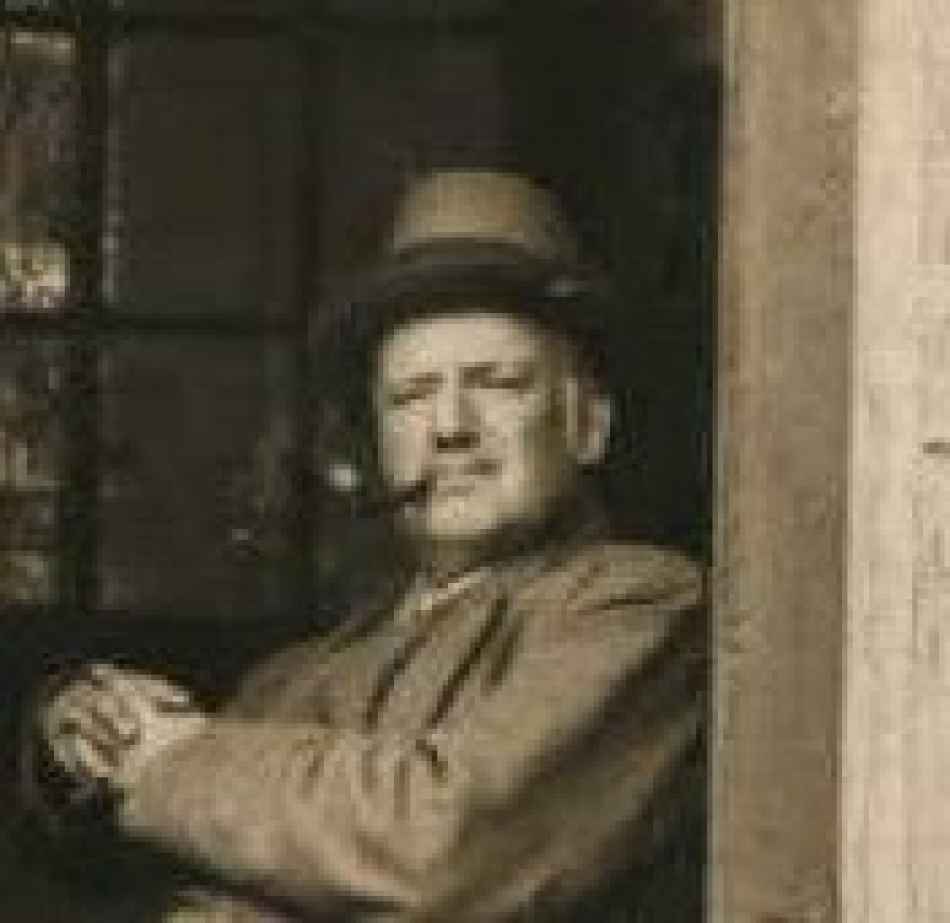
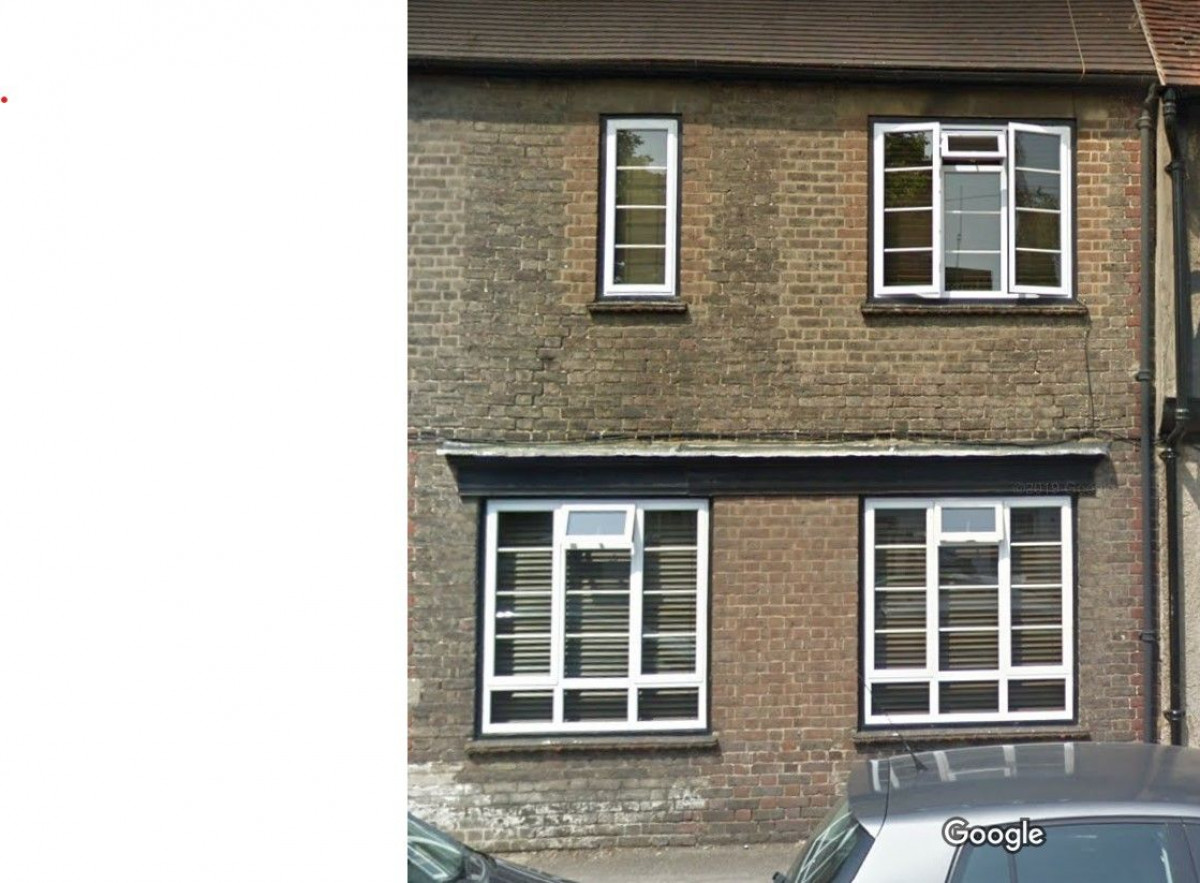
Upon the demolition of some old cottages in Castle Street, Hosea built a new fishmonger’s shop. Although he is consistently referred to in subsequent census returns as a fishmonger, he also sold fruit and presumably, given he held an off licence, also alcohol. Percy Birtchnell described in the Berkhamsted Review, “… some particularly interesting buildings between the Bulbourne and the site now occupied by Dean’s Hall…Some of the cottages were pulled down to make way for the “St George and Dragon” temperance hotel and for the adjoining house – formerly Mr “Dick” Ward’s fish shop -which was built at night by workmen employed elsewhere during the day.” Hosea’s fish shop was quite literally built by moonlighters. The new shop, at 61 Castle Street, was complete by 1882; the Bucks Herald of September that year reported that Hosea had applied to the Rural Sanitary Authority “…for permission to occupy his newly erected house in Castle-street, now completed to the satisfaction of the inspector, with the exception of the outbuildings. It was resolved that on Mr Ward undertaking to complete all the work to the inspector’s satisfaction, and in accordance with the plans, permission to be given, to which Mr Ward agreed.” Building regulations and red tape were evidently also a feature of Victorian life. A photograph of Hosea, later in life, shows him sat in the doorway of his shop, pipe in mouth, looking out at the camera with a distinctly proprietorial air. The building still stands in Castle Street today, the door having been bricked up and the front windows replaced, but the wooden lintel above on which Hosea’s name was painted remains in place.
Hosea seems to have had an eye to the main chance and tried his luck, unsuccessfully, with various schemes. In 1883 he acquired a number of pigs. He may have intended to fatten them and sell them to one of the town’s butchers or perhaps butcher them himself. Either way the plan failed. He was summoned by the Inspector of Nuisances for creating a nuisance by keeping the pigs. He was ordered to abate the nuisance and pay costs of 16s 6d. In 1901 he asked the Urban District Council to let him have the sewage farm for grass and grazing purposes at a yearly rental of £8. The committee decided “they could not entertain the application.”
In 1903 Hosea again found himself in trouble. He was discovered by P.C. Barber drunk in Water Lane. He did not appear in court, but the court was told he admitted the facts. He was fined 5s and costs of 5s. Two years later in 1905 he was again charged and convicted of drunkenness.
The Rectory Lane Cemetery burial records also reveal that a second Ethel May Ward of 61 Castle Street was buried in the cemetery in 1905. She is not to be confused with the Ethel May Ward born to Hosea and Phoebe in 1887 and who died at the age of 2 in 1889. The latter Ethel was the daughter of Hosea and Phoebe’s daughter Susan. Susan was still living with her parents at 61 Castle Street in 1901 and that is the address at which Ethel was born on 21st August 1904. Susan was about 24 years old when Ethel was born and she was not married. The birth certificate does not reveal the name of Ethel’s father.
Ethel was evidently named for her aunt who had died in infancy. She was to die at the even younger age of 5 months and was buried in the graveyard on 9th February 1905. Although the records tell us that this second Ethel was buried in the cemetery, they do not tell us where she lies. If she was buried in plot 33 with her namesake, the memorial makes no mention of her.
Phoebe died on the 13th August 1920. She was buried with her daughter, Ethel, who had been buried in 1889. Hosea continued living at 61 Castle Street and in 1929 Lizzie Garment joined him there. He was 63 and Lizzie, who was originally from Aldbury and seven years younger than Hosea, probably came to keep house for him, but the two of them married in 1934. By 1939 Hosea had retired as a fishmonger and moved from 61 Castle Street to Alma Road in Northchurch, were he and Lizzie lived until his death on 12th March 1941 at the age of 84. He was buried with his daughter Ethel and first wife Phoebe. He left no will and his modest estate worth £287 10s passed to Lizzie.


 View burial



 Personalities of the Past
 Memorial Symbolism

 Military graves