


Biography:
Charlotte Catherine Anne, Countess of Bridgewater
20/11/1763 –11/02/1849

Charlotte Catherine Anne, Countess of Bridgewater
 View full burial details
View this burial
View full burial details
View this burial in the cemetery
Although Charlotte Catherine Anne, Countess of Bridgewater, is not buried in Rectory Lane Cemetery she is of supreme importance in its history.
She was born in 1763, the daughter of Samuel Haynes and Elizabeth, his wife. At the age of twenty she married John William Egerton, a son of the Bishop of Durham, who was to become the 7th Earl of Bridgewater in 1803. He was ten years her senior, a cavalry officer and a Tory member of Parliament. It was a childless marriage. The 7th Earl died in 1823 at the age of 70 at Ashridge and is buried in Little Gaddesden Church. The Countess was to live for another twenty-six years, dying at the age of 85 in 1849. She is also buried in Little Gaddesden.
As a widow, the Countess carried out a number of benevolent activities to improve the welfare of the people of the villages and towns near to Ashridge, concentrating particularly on the educational needs of the children and improving the welfare of the poor. There appears to be no evidence of such activities whilst her husband was alive. The Countess established an Educational Trust in the parish of Ivinghoe, whereby the schools there and in the surrounding villages received an annual grant of £10. This Trust exists to this day, and whilst of little value now, was at the time a very generous bequest.
Berkhamsted was the nearest town of any size to Ashridge and the Countess soon turned her attention to the needs of its children.
In 1834 she gave land at the bottom of Cross Oak Road (Gilham’s Lane), to build a school ‘based on the principles of the Church of England’, a National School, for the children of Gossoms End, a heavily populated area at the time. The Junior school was demolished in 1972 to be replaced by a garage. The Infants’ School was demolished more recently, used latterly by the Gossoms End Cubs.
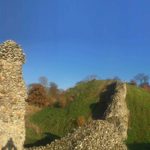
The Countess was very aware of the difficulties of the poor, especially in harsh winters when work on the land was not possible and work in other trades was also restricted. It is not clear exactly when the soup kitchen was established, but we do know that in 1841 the Countess ordered the Soup House to ’be built and fitted up for the use of the charity at the building in the Old Castle.’ This could imply that the soup kitchen already existed elsewhere in the town and was to be moved to the Castle. It is not clear how long the Soup House remained in existence but there are references to the charity until the late 1890s.
It appears from recent research that the present Visitor Room at the Castle is the Soup House which the Countess of Bridgewater ordered to be established. While not many documents relating to the Charity remain the Berkhamsted Soup kitchen receives many references in the local press.
In 1841, Charlotte purchased land behind Egerton House when the house was put up for auction, the owners having bankrupted themselves by building the fine terrace of four town houses (103-109 High Street) to its west. The Countess immediately donated an acre to St Peter’s Church; the churchyard was full to capacity and the parish was in desperate need of a new burial ground. The new plot of church land was officially referred to as “St Peter’s Churchyard (Detached)” — now Rectory Lane Cemetery.
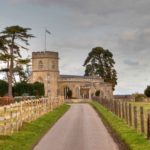
Charlotte Catherine Anne died on 11 February 1849 at age 85 at Ashridge. She was buried on 22 February 1849 in the family vault in the Church of St Peter & St Paul, Little Gaddesden.
Relatives
No relatives have been linked to Charlotte Catherine Anne, Countess of Bridgewater
Historical Connections
The following local places of interest are linked to Charlotte Catherine Anne, Countess of Bridgewater:
 Ashridge House
 St Peter’s Church
 Berkhamsted Railway Station
 Berkhamsted Castle
 Grand Junction Canal
 St Peter & St Paul, Little Gaddesden
 Isles of Scilly
 St Peter's Churchyard
 The Hall
 Drum House, Edinburgh
 Military graves