27/02/1863 –23/06/1943
Born in Bengal, wife of an Indian army officer, volunteer nurse with the VAD WWI in London
Relatives
Research:
EVA ROSE RENNY; 1863 – 1943
Eva was born on 27th February 1863 in Saugor, Bengal. Her father was Captain Harry Vince Timbrell of the Royal Artillery, Bengal and her mother Ellen Lockwood Timbrell. She was baptized in Saugor on 2nd April 1863.
Eva was the third child born to Harry and Ellen. The 1881 census identifies the following children of the family: Ellen, born in 1857 (Ellen was to die in 1890); Florence born in 1860; Eva, 1863; James,1867; Mabel, 1870 and last, but not least, Charles, 1878. By the time of the 1881 census Harry had retired from service in the Indian Army and the family had settled in Exeter.
Eva married Alexander Renny early in 1895, the marriage being registered in Fulham, London. Alexander, an officer serving in the 7th Bengal Cavalry, must have been in England on leave at the time of the marriage. Eva returned with him to India where their first child, a daughter, Ellen Juliana Renny was born in 1900. She was baptized at Mussorie, Christ Church, Bengal. Alexander retired from the Indian Army on 17th December 1903, with the rank of colonel and commandant of the 7th Bengal Lancers. Two further children were to follow, Alexander Timbrell Renny, in 1904, born in London and Rose Christine Renny in 1905.
Both Eva and Alexander came from British families in India. Alexander’s father, George Renny, was born in 1826 and commissioned as an officer in the Honorable East India Company’s (HEIC) Bengal Artillery, which latterly, when the British government took over government of India from the Company, became the Royal Artillery, Bengal. He was appointed lieutenant colonel in August 1871, colonel in August 1876 and he retired in 1878 with the rank of Major General.
Harry Timbrell, born in 1827, was a year younger than George Renny. He too served as an officer in the HEIC Bengal Artillery and Royal Artillery, Bengal. His career closely followed a few months behind that of George Renny; he was appointed lieutenant colonel in January 1872, colonel in January 1877 and he too retired in 1878 with the rank of Major General.
As contemporaries and fellow officers serving in the same regiment, Harry Timbrell and George Renny would have known each other very well. No doubt their families, Alexander and Rose included, would have also known each other. Alexander’s first appointment in 1873, after graduating from the Royal Military Academy Woolwich, was as a lieutenant in the Royal Artillery, Bengal and he would have served with both his father and Harry Timbrell, albeit as a junior subaltern, as their careers came to a close.
When Eva and Alexander married neither were in the first flush of youth. Eva was 32 and Alexander 41. Early marriage was frowned upon. Members of the Indian Civil Service were forbidden to marry before the age of 36 and marriage was made difficult for officers of the Indian Army. A marriage allowance was not paid until an officer was 26 and it was customary to obtain the colonel’s permission before marrying. Questions would be asked to ensure that the bride-to-be was suitable. Permission was frequently refused, at least until the rank of captain had been attained. The informal rule was that subalterns could not marry, captains might marry, majors should marry and colonels must. Alexander was promoted to rank of captain in 1885 and the year after his wedding to Eva he was promoted to Lieutenant Colonel and Commandant of his regiment.
Life as the wife of an officer serving in India could be far from romantic.“For the memsahib life could be boring, claustrophobic and confined, though attitudes gradually changed over the early years of the twentieth century. The pioneers of the 1920s, who undertook voluntary work in nursing and teaching, had become more commonplace by the end of the Thirties. But overall memsahibs lived a life of intense boredom. Once they had agreed the day’s meals with their cook, there was nothing for them to do. People might visit for a game of bridge or for coffee and gossip. Husbands came home to lunch, then a siesta. After that, there was tennis at the Club, where our memsahib might stay drinking until dinner and then go on to a dance or perhaps a party. She might very occasionally have a love affair but it had to be extremely discreet – living was too communal and she dared not be discovered.”
(Merryn Allingham)
Eva, as the daughter of a Major General, would no doubt have met the standards required of an officer’s wife and having been brought up in a military family, she would have had known exactly what to expect from such a life.
Upon Alexander’s retirement from the Indian army in 1903, the family settled in Cheltenham and it was there that the couple’s youngest child, Rose was born. The 1911 census tells us that family were living at Ivymead, Moorend Street, Cheltenham and the electoral rolls for 1913-1915 also record Alexander as living in Cheltenham.
In August 1914 the First World War broke out. Alexander returned to military service as Lieutenant Colonel of a territorial battalion, 1st/15th battalion, London Regiment. He remained in command until July 1915 when he was hospitalized whilst on leave in England.
Eva and Alexander lived in London during the war and Eva volunteered to serve in a Voluntary Aid Detachment (“VAD”). The VAD was a voluntary unit of civilians providing nursing care for military personnel in the United Kingdom. Many upper and middle class women in particular volunteered for such work. They helped with cleaning, canteen work and routine nursing tasks.
Eva’s VAD record card details her service. She volunteered to serve in London VAD in October 2016 having previously spent three months with VAD in Winchester Hospital. The card records that apart from two months canteen work for disabled Belgian soldiers, all her duties were nursing and she served a total of 2,688 hours.
Following the end of the war, Eva and Alexander moved to Berkhamsted. The 1920 electoral roll discloses that Alexander was registered as living at Darsdale in Cowper Road. The roll for 1921-1925 gives the address Whiteleaf, Montague Road. In 1924 Eva and Alexander’s eldest daughter, Ellen Juliana, married Francis (“Frank”) Priestland. Frank was the publicity manager for Cooper’s and he was brother-in-law to Sir Richard Ashmole Cooper, 2nd Baronet (married to Frank’s sister Alice) who was the owner of the sheep dip business.
Alexander died in 1925 and the electoral rolls tell us that Eva moved a number of times. She is recorded on the 1926 roll as living at 4 Kitsbury Terrace. Between 1927-1928 she was at St Abbs, Kings Road. The next record we have of her is the electoral roll for 1930. She had by then moved away from Berkhamsted and is to be found on the roll living at Drayton Hall, West Drayton. Drayton Hall had been the home of the de Burgh family, but from 1856 it was to let to various tenants. The 1930 roll gives the names of a number of residents at the hall, presumably all tenants. By 1939 Eva had returned to Berkhamsted. The 1939 Register records that she was living at the home of her daughter Ellen and Frank Priestland, “Bryher”, in Potten End. She is noted as being a widow and is described as “incapacitated”. Ellen was presumably caring for her mother. It would appear that between living in Drayton Hall and moving to live with Ellen, Eva lived in Carshalton, Surrey. Notice of her death in the London Gazette, gives her address as “Bryher”, Potten End, Berkhamsted, Herts, formerly of “Pitlochry”, Downside Road, Carshalton, Surrey.
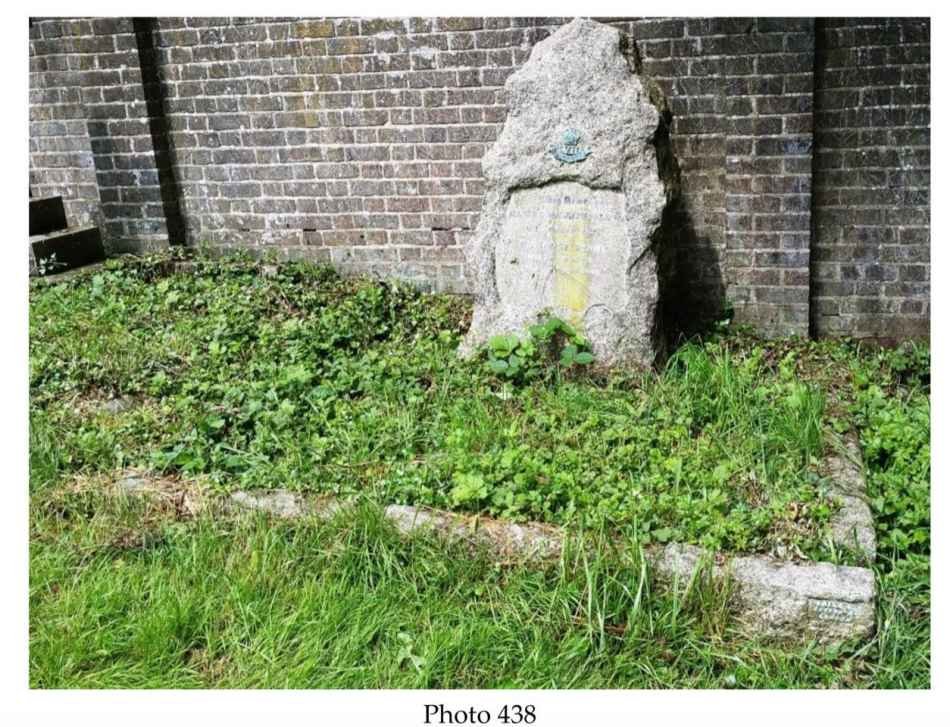
Eva died on 23rd June 1943 at the age of 80 years. She is buried with her husband Alexander in Rectory Lane Cemetery.


 View burial

 Personalities of the Past
 Memorial Symbolism

 Military graves