1795 –18/06/1879
Royal Navy Admiral
Relatives
Research:
GEORGE CORNISH GAMBIER; 1795 – 1879
Given George’s paternal antecedents, it should come as little surprise that he was to make his career in the Royal Navy. His great uncles included no less than three Admirals, Admiral Charles Middleton, Vice Admiral James Gambier and Admiral Lord Barham. His grandfather John Gambier, was Lieutenant-Governor of Bahamas, and amongst George’s uncles was Admiral of the Fleet James Gambier, 1st Baron Gambier, G.C.B.. George’s own father, Samuel Gambier, was a Commissioner of the Admiralty Board.
His mother, Jane, came from the well to do Mathews family who lived at Felix Hall in Essex. Louisa, the wife of George’s uncle James was Jane’s older sister The Mathews family owed their wealth to slavery. They were the owners of a sugar plantation at Cayon, on St Kitts, on which were kept some 300 slaves. George’s father, Samuel, brought Chancery proceedings on his wife’s behalf, seeking an account of the profits from the plantation.
In 1807 Parliament passed the Slave Trade Act. Whilst this outlawed the international slave trade, it did not abolish slavery itself. That did not come for a further 26 years and the passing of the Slavery Abolition Act of 1833. The 1833 Act provided for the payment of compensation to slave owners for loss of their “property” and in 1834, £4,968 10s 3d was paid for the Mathew’s estate. Samuel had died in 1813, some twenty years before, and it was George’s uncle, James, 1st Baron Gambier, who made the claim for compensation (although he died in 1833 shortly before it was paid). The Centre for the Study of the Legacies of British Slavery notes, laconically, “James Gambier has an entry in ONDB [Online Dictionary of National Biography] as ‘naval officer and evangelical activist’ which is silent on his connections to slavery.”
Whilst the 1833 Act abolished slavery, the slaves themselves found themselves exchanging one form of servitude for another. They were designated “apprentices,” for a further six years before they actually became free. Whilst the slave owners were compensated, nothing was paid to former slaves.
George was born in 1795 in Shenley in Hertfordshire and was baptised on 13th December that year. Even by the standards of the day, the Gambier family was large. He was one of fifteen children born to Samuel and Jane. One of George’s brothers, Robert, also became an admiral. Another, Edward, became a judge and was knighted and two more, Frederick and Samuel, became clergymen.
On 18th June 1808, during Napoleonic Wars, George, then 12 years old entered the Navy as a midshipman. The United Service Journal, Vol VI, published in 1831 carried the following resume of George’s naval career up to that date.
“GEORGE CORNISH GAMBIER, Esq.
[Post-Captain of 1821.]
A son of the late Commissioner Samuel Gambier, R.N. by Jane, youngest daughter of Daniel Mathew, of Felix Hall, co. Essex, Esq., and nephew to Admiral Lord Gambier, G.C.B.
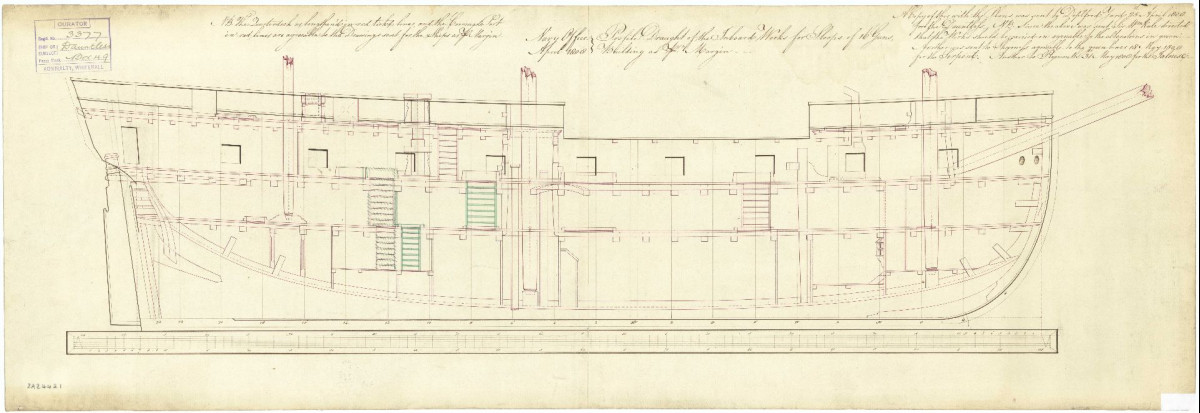
This officer entered the navy June 18th, 1808; and served us midshipman on board the Unicorn and Acasta, frigates, commanded by Captain Alexander Robert Kerr, and employed as cruisers in the bay of Biscay, from Oct. 1800, until Nov. 1811; when he joined the Malta 80, bearing the flag of Rear-Admiral Hallowell; in which ship he continued, on the Mediterranean station, during the remainder of the war. He was made lieutenant, March 6th, 1815; appointed to the Orlando 42, Captain John Clavell, Aug. 17th following; removed to the Minden 74, flagship of Sir Richard King, in the East Indies, March 12th, 1817; re appointed to the Orlando, July 4th in the same year, and to the Minden, Feb. 12th, 1818; appointed to the Topaze 40, Captain John Richard Lumley, Sept. 20, 1819; promoted to the command of the Curlew sloop, on the same station, Dec. 7th, 1819; and posted into the Dauntless 24, June 4th, 1821.
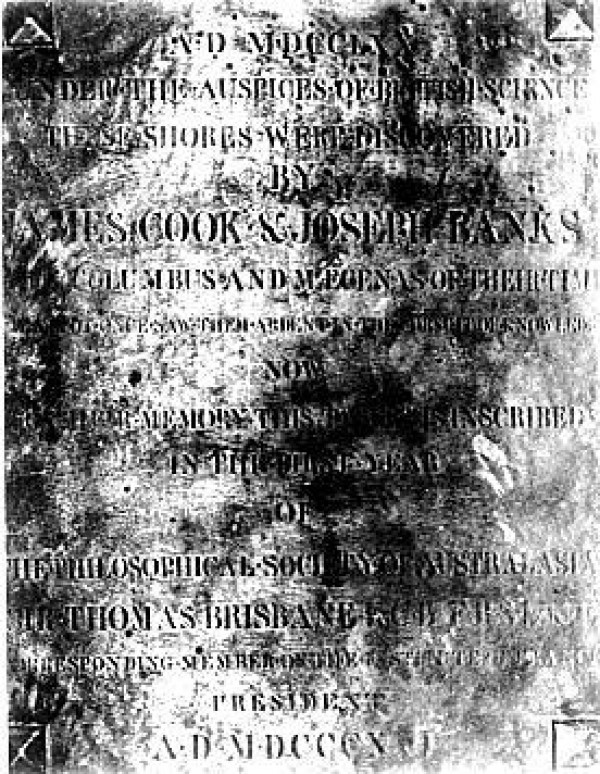
Captain Gambier subsequently visited China, New South Wales, New Zealand, the western coast of South America, the Marquesas islands, and Otaheite. In March, 1822, when on his return to India, from the Pacific Ocean, he made an excursion to the south head of Botany Bay, in company with the members of the Philosophical Society of Australia, and assisted at the ceremony of affixing a brazen tablet, with a suitable inscription, against the rock on which Captain Cook and Sir Joseph Banks, “the Columbus and Miecenas of their time,” first landed. He then proceeded through Torres Straits to join his commander-in-chief. The Dauntless was paid off, at Portsmouth, towards the end of 1823.”
The rank of Post-Captain, now obsolete, was used to distinguish officers of that rank from more junior officers given command of a vessel who were nevertheless addressed as Captain, although not technically holding that rank. George, for example, was given command of the sloop Curlew in 1819, but it was not until 1821 that he was posted to HMS Dauntless and made Post-Captain. Promotion to Post-Captain did not however, guarantee continuing command of a ship and that was George’s fate. When HMS Dauntless returned from the Pacific in 1823, the ship was paid off and George, without a command, was “on the beach” and reduced to half pay.
Being “made post” was considered a crucial event in a naval officer’s career. Until 1864, once the rank of Post-Captain was attained, further promotion was strictly by seniority. As older, higher-ranking offices died, so an officer moved up in seniority. Provided he did not die or disgrace himself, he was guaranteed to reach the rank of admiral. Since admirals were promoted only from the top of the Captains’ List, the younger an officer was when made Post-Captain, the more likely he was to reach high rank, George’s uncle James was such an example, rising to become one of the Navy’s highest ranking officers, he had been made Captain at the young age of 22.
As those officers more senior to George died, so he began his inexorable rise up the ranks. By an Order in Council made in 1846, Captains who had been on the List for at least ten years and were of sufficient age, were entitled to retire, but they continued to receive reduced pay and were permitted to assume the title of retired Rear Admiral at the date they would have been promoted to Rear Admiral by seniority if still on the Active List
George must have taken advantage of the 1846 order to retire. His appears as active in the Navy Lists of 1844 and but was on the retired Captain’s List in 1847. In 1852 George was promoted to the rank of retired Rear-Admiral. In 1858, he became a retired Vice-Admiral and in 1863 he made the rank of retired Admiral, all without having actually been to sea since 1823.
Although he may not have commanded a ship since 1823, George was actively involved with the welfare of sailors ashore, contributing substantial sums of his own money to providing for destitute sailors. The resume of his career in the United Services Journal referred to above had the following to say on the subject.
“Captain Gambier has since employed himself in making “noble and generous efforts to improve the morals and condition of our seamen, and to protect their persons and property us soon us they come ashore, from those harpies in London and other ports, that are always on the look-out to rob and ruin them.” It has, indeed, been stated, that, during the last two years, he contributed more than 1000l. towards the feeding, clothing, and sheltering of numerous poor fellows, who, either from their own improvidence, their inability to obtain employment, or the villainy of land-sharks, had been reduced to the very extreme of destitution. “A better omen than this, of patriotic feeling, and attachment to the ‘wooden walls,’ is not often to be met with.”
George also contributed £100 towards the cost of the renovation of St Peter’s Church in the 1870s.
George’s benevolence was commented upon in an obituary published on his death. “The gallant admiral was of a genial and benevolent disposition, always ready to assist in any good cause, and it is to be feared that at times his good nature was imposed upon.” (Bucks Herald, June 1879.)
Having spent 15 years sea, George became a confirmed batchelor and he never married. He seems to have spent his life ashore staying with various members of his family and friends. In 1841 we find him, together with his widowed mother and two of his sisters visiting Iver Grove, in Bucks, the home of his aunt Lady Gambier (his uncle James, had died in 1833). In 1851 he was visiting Albury, Guildford and staying at the home of Archibald Edwards, a barrister. Ten years later he was visiting Egdon Hall in Northamptonshire where the family of Charles Annersley, Lord of the Manor, lived. Other guests at Egdon Hall included an Earl’s daughter and the Archdeacon of Sarum.
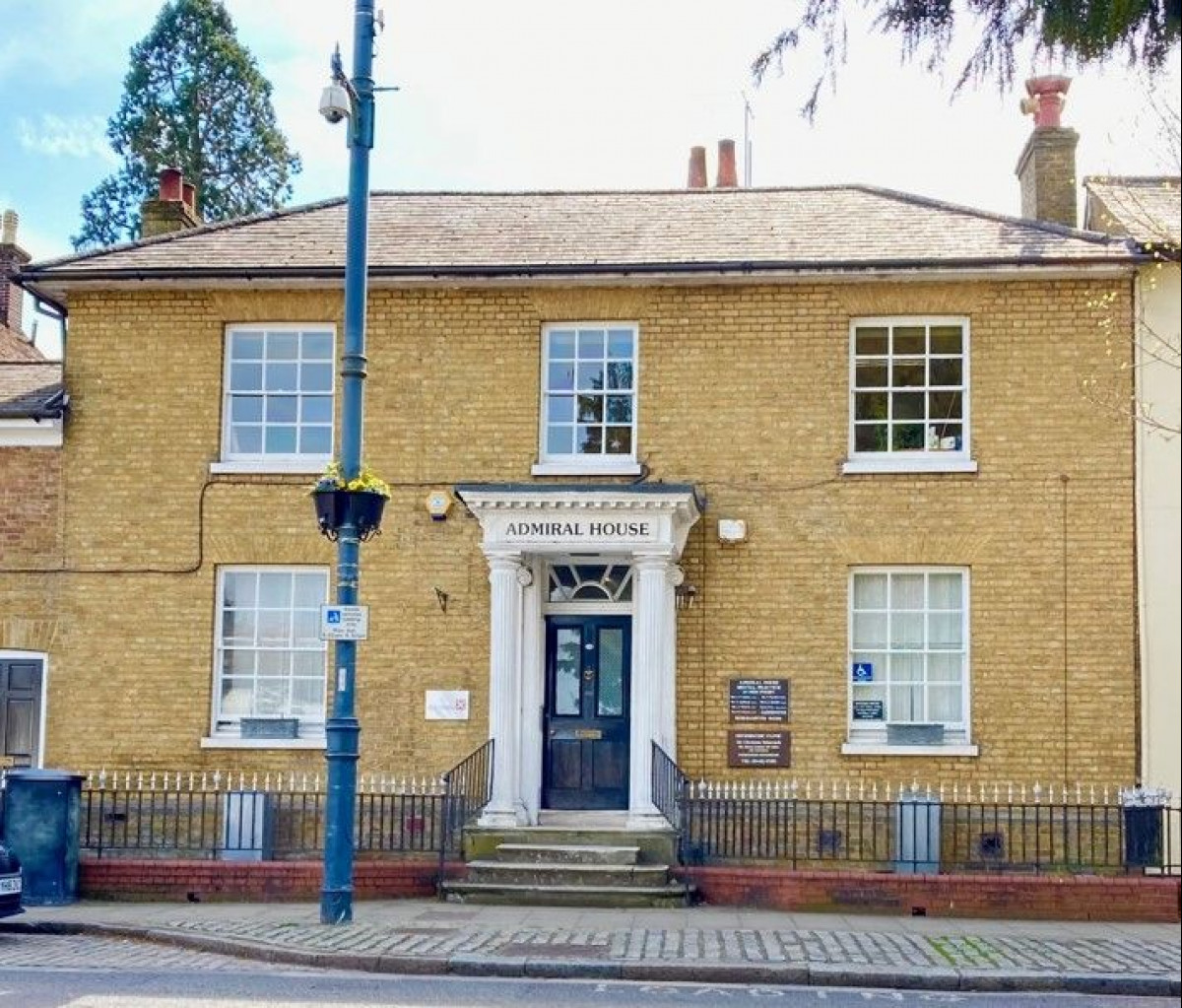
By 1871 George had moved to Berkhamsted and was living with his sister Henrietta on Berkhamsted’s High Street. The house stands on the High Street opposite the junction with Castle Street and is today aptly named “Admiral House.” Henrietta had settled in Berkhamsted by 1861 and at the time of the census that year another sister, Louisa was visiting Henrietta. Louisa must have stayed with Henrietta, as she died in 1863 in Berkhamsted and was buried in Rectory Lane Cemetery. Henrietta died in 1875 and was buried with Louisa.
It was fairly common at this time for fights to break out between parties of boys from the town and boys from Berkhamsted School, not only with fists but also with snowballs often containing stones. Such fights, sometimes quite serious affairs, were enjoyed by George who cheered them on.
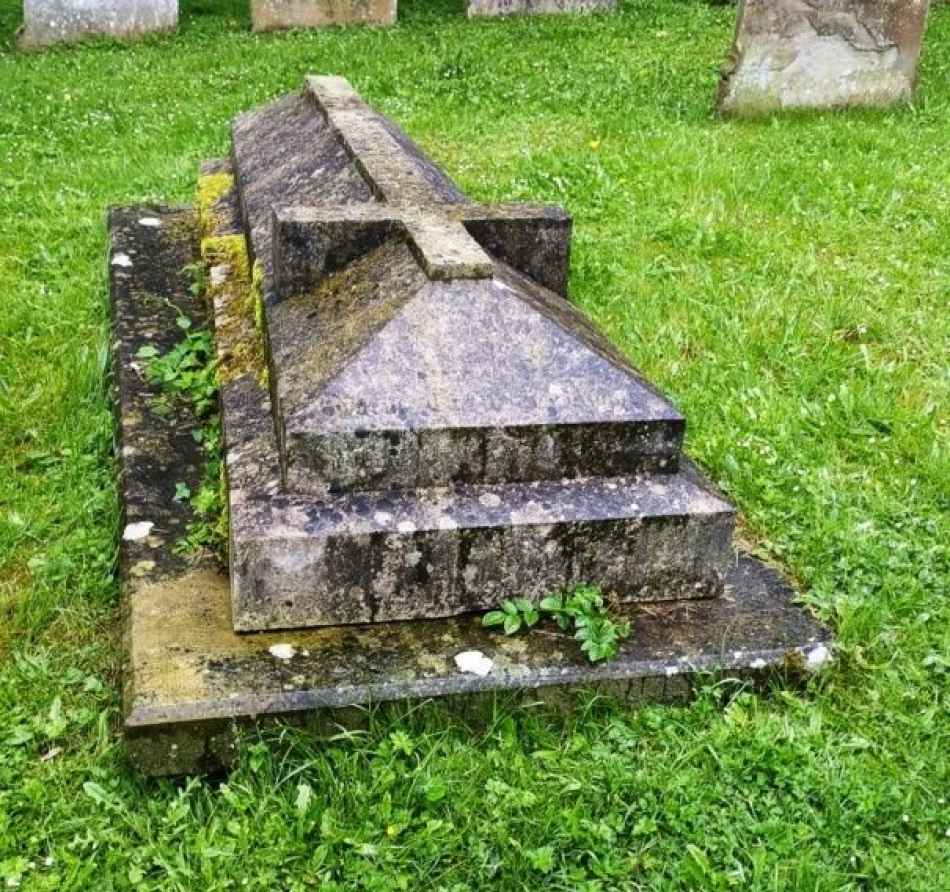
George himself died on 18th June 1879 at the age of 85 and joined his sisters in the cemetery. His obituary published in the Bucks Herald (quoted in part above) read:
Death of Admiral Gambier…
Mary 1787-1832; Henrietta Maria 1788 -1875; Emily Jane 1789- 1866; Charles Samuel 1790 -1848; Maria 1791 – 1867; Robert 1791 – 1872; Louisa 1793- 1865; Edward John 1794 – 1879; George Cornish 1795 – 1879; Frederick 1797 – 1870; Caroline Penelope 1799-1866; Sophia Rose 1800- 1878; Francis Shea 1802- 1813; Frances Anne 1806 – 1893; Samuel James 1807 -1878


 View burial


 Personalities of the Past
 Memorial Symbolism

 Military graves