1848 –25/04/1915
Baker from Chesham, son of a baker and father of another
Relatives
Research:
EDWARD KINGHAM; 1848-1915
Edward was born in 1848, the fourth child of William and Martha Kingham. His father was a baker. He was born in Chesham where he lived with his family until later moving to Berkhamsted. At the time of the 1851 census, the family was living at 112 High Street Chesham. Edward lived there with his parents and his older siblings Emma, Sophia and Charles. Additionally two lodgers were living with the family, William Tompkins, a gardener aged 73 and Joseph Humphrey, age 27 years, a bricklayer’s labourer. Edward’s mother, Martha, was 32 years old in 1851 and her maiden name was also Humphrey, so it seems probable that Joseph Humphrey was her brother.
Ten years later the family was still in Chesham, but was now living at 105 High Street. The two lodgers were no longer with the family (the elderly William Tompkins may well have died by then). Edward’s oldest sister had also moved away from the family, but Edward had been joined by his younger brothers, George, born in 1855 (and who is buried in plot X223) and Frederic, born 1857 (buried in plot 865).
Edward, at the age of 13 years was already working. He was a bowl turner’s apprentice. Percy Birtchnell, writing as Beorcham in 1950, noted that bowl turners had been plying their trade in the Chilterns when Berkhamsted Castle was in its prime. He quotes a mid 18th century writer, William Ellis of Little Gaddesden who says that alder poles were “turned to great account amongst the Berkhamsted and Cheshunt turners of hollow-ware, who in this commodity make more consumption of this wood and of beech than any other two towns in Great Britain… They make dishes, bowls and many other serviceable goods.” The tools were primitive; instead of lathes they used a “shaving horse” but they were nevertheless skilled craftsmen. “Yet what feats of craftsmanship were they able to perform! It is on record that a Berkhamsted man turned a bowl so thin that it could be pushed inside out like a soft hat.”
Ten years later the 1871 census reveals that Edward had moved from Chesham and was now living at 87 High Street Berkhamsted. This was the home of Henry Baldwin and his sister, Sarah, yet another Humphrey and no doubt another relation of Edward’s mother. Harry Baldwin, like Edward’s father William, was also a baker. Whether or not Edward had the necessary skill to be a bowl turner, the 1861 census tells us he had given that occupation up to follow in the footsteps of his father and Harry Baldwin. He is described as “journeyman baker” and presumably worked with Harry.
As a “journeyman” Edward was by then a skilled worker who had successfully completed his apprenticeship as a baker. Although as a journeyman he would have been considered competent, he would not then have been able to work as a self-employed master baker. The term journeyman was originally used in the medieval trade guilds. Journeymen were paid each day and this is where the word ‘journey’ derived from- “journée” meaning ‘a day’ in French.
Life as a baker in Victorian times was hard and unpleasant. Work started around 11.00 pm each night and the bakers worked through the night to prepare the following day’s bread. Kneading the dough by hand (or even by foot!) was hard physical work. They worked in dusty conditions and the baking ovens gave off considerable heat. It was not until late afternoon on the following day that the baker’s work was done. The Chambers Edinburgh Journal described the trade in 1848 in the following terms:
“The journeymen bakers of London are almost without exception overworked. From 18 to 20 hours of continuous occupation, with perhaps a nap of from an hour to two hours on a board, may be stated as the rule with the large majority of the trade. It often happens towards the end of the week that the poor fellows are employed without rest or sleep for more than 48 hours on a stretch … they are very badly paid. One reason of the low wages of journeymen bakers is undue competition…Another circumstance which tends to reduce wages, and which is at least as effective as competition itself, is the bad state of health of the journeymen bakers, brought on by the very overwork of which I have been speaking…They are exposed to heat, which, while it exhausts them, renders them liable to colds, and seems to favour determination of blood to the head; to dust from the flour, which irritates the lungs; and to severe exertion, which leads to palpitation, diseases of the heart, and apoplectic seizures… The bakers, as a class, are short-lived. There are few old or even middle-aged men among them. “
Arguably Edward might have done better sticking to bowl turning.
In 1872, on 27th February that year, Edward married. His bride was Annie Chiltern who lived in Northchurch. Annie’s father, William Chiltern, was also a baker and presumably it was through that link that Annie and Edward met.
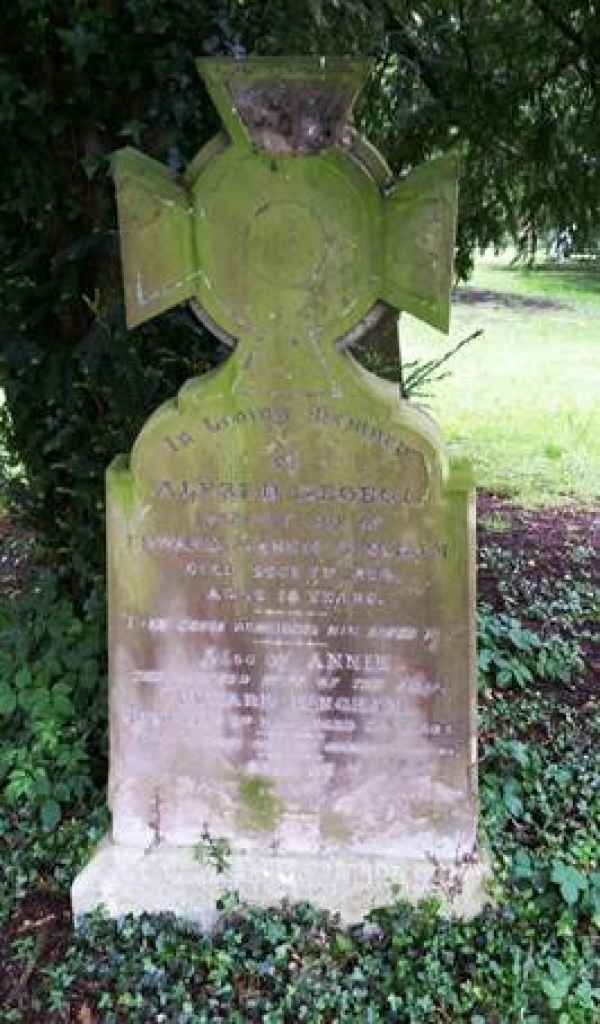
The couple’s first son, Edward William Kingham was born in 1873 and their second son, Albert was born in 1875. By the time of the 1881 census the family was living in Raven’s Lane together with two lodgers. A third son, Alfred, was born in 1877. Neither of the two younger boys lived to an old age. Alfred died age 18 years old in 1894 and Edward’s wife Annie died in 1898. At the time of the 1901 census Edward was living at 118 High Street with Albert. Edward was still baking and Albert had joined him in that trade. Albert however died later that year age 27 years.
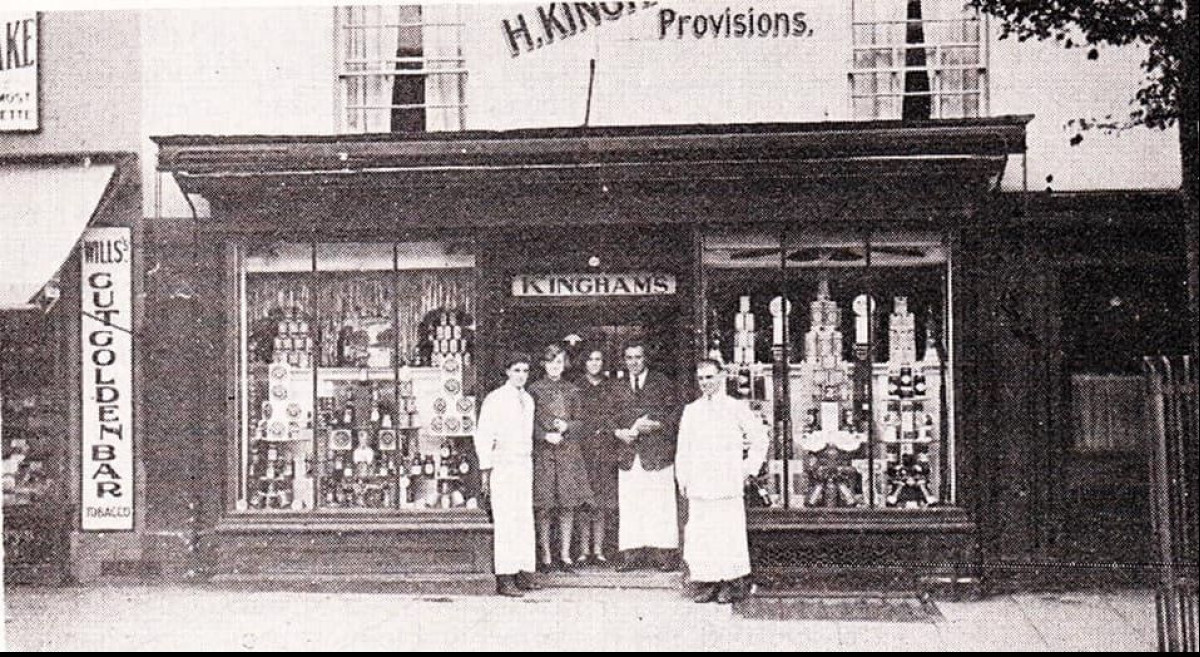
By 1911 Edward, then aged 63 years and still a baker, remained living at 118 High Street but had been joined there by his eldest son, Edward William, Edward’s wife Mary and their son, Edward Arnold Stapleton Kingham. Edward escaped the traditional family occupation of bakery; he was a depot manager. He was also the only one of the family who escaped interment in plot 230.
An article published in the Herts Advertiser in August 1892 entitled “Bread v Meat” explained that “Ye merry butchers have challenged ye jolly bakers to a game of ye old English cricket in costume.” The two teams met outside the Crown Inn and from there processed to the cricket ground led by a brass band. A butcher, dressed in blue marched alongside a baker wearing a white hat. Captains were appointed and it was Edward that was captain of the bakers. Many townspeople turned out to watch the match; “…there could not have been less than a thousand spectators and there was much cordiality and fun and genial banter.” After the match (which the bakers won) the teams returned to the Crown, sang Auld Lang Syne and the National Anthem and retired to the inn for supper.
Edward’s death certificate records that he died on 11th April 1915. He had moved from Manor Street and was living at the time of his death at 11 Charles Street. Whether his son and family were still living with him is not clear (The 1920 Electoral Roll places them then in Cross Oak Road), but Edwards’ death was reported by H Cheshire “Occupier 11 Charles Street”
The cause of death of death was cirrhosis of the liver and exhaustion, the latter often being a symptom of the former. Cirrhosis is a late stage of scarring of the liver caused by many forms of liver diseases and conditions, such as hepatitis and chronic alcoholism. If it was heavy drinking that caused cirrhosis in Edward’s case, it is perhaps not surprising that he turned to drink having watched his wife and two of his children die of tuberculosis.
Edward died in 1915 and was buried in Rectory Lane Cemetery on 15th April 1915.


 View burial



 Personalities of the Past
 Memorial Symbolism

 Military graves