Relatives
Research:
LESLIE GOSS; 1916 -1944
Leslie was born in Berkhamsted on 24th October 1916. He was the only child born to Walter and Emma Goss. Walter, like many other members of the Goss family was a brush maker; the family had a brush manufacturing workshop at the west end of Berkhamsted’s High Street.
Leslie, however, did not follow his father and uncle’s footsteps to become a brush maker, as by the 1930’s “As happens in so many industries, new methods of manufacture reduced the demand for hand made brushes – hard work it was too – at Goss Brother’s brush factory on the site now occupied by Underhill and Young’s garage at Gossom’s End.” Leslie, at the age of 22, and still living with his parents, was a tobacco salesman. He was also a Special Constable.
With the outbreak of war in September that year the National Service (Armed Forces) Act required all males aged between 18 and 41 years to register for service. Leslie was accordingly found himself serving as a private in the Royal Army Service Corps. He was posted to Singapore where he was a member of the Motor Transport Depot.
Singapore was the foremost British military base in the Far East and garrisoned by 85,000 men. It was considered impregnable. It was erroneously believed that the jungle terrain of the Malay peninsula to the north of Singapore was impassable. The Japanese swiftly moved through this terrain, outflanking Allied defences as they advanced and Singapore was surrendered on 15th February 1942. Some 50,000 Allied troops had been taken prisoner as Japanese troops advanced through Malaya and with the fall of Singapore a further 80,000 were captured, including Leslie. Churchill called the fall of Singapore “the worst disaster and largest capitulation in British History.”
Leslie was one of about 60,000 allied prisoners and 250,000 impressed civilian labourers who were put to work by the Japanese as forced labour to construct 258 miles of railway between Thailand and Burma. Living conditions, on what became known as the “Death Railway” were horrific with brutality, maltreatment, sickness and starvation. It is estimated that about 90,000 labourers and 12,000 prisoners died during the construction of the railway.
Leslie survived his ordeal working on the railway. When construction was complete, over 10,000 of the survivors were transported to Japan to work there, Leslie being among their number.
On 6th September 1944, 900 prisoners who had laboured on the railway, including Leslie, were loaded on board the Japanese steamship Kachidoku Maru and a further 1,800 were packed on to the Rakuyo Maru. The prisoners were still suffering from the effects of severe malnutrition and tropical diseases. They were crammed into the holds of the ships shoulder to shoulder with a shelf above them to contain another layer of men. As well as prisoners, the ships were also carrying important war material including oil rubber and bauxite.
The Kachidoku Maru and Rakuyo Maru both set sail on 6th September 1944 as part of a convoy bound for Japan. At 5.00 a.m. on 12th September the Rakuyo Maru was hit by torpedoes fired by the U.S Submarine Sealion. The ship took some hours to sink. There were very few lifejackets and the Japanese commandeered the lifeboats. The U.S. submarines continued to patrol the area and some three days later spotted wreckage, debris and men floating on rafts. The submarine crews, who had not known there were prisoners on board the ships they had attacked, picked 157 survivors up.
Kachidoku Maru was torpedoed by US Submarine Pampanito at 10. 40 p.m. also on 12th September. Unlike the Rakuyo Maru, Kachidoku Maru sank in minutes. The 900 prisoners on board had to scramble out of the hold and jump into the sea in the dark of night. Japanese ships returned the following morning and picked up 500 survivors from the Kachidoku Maru, who were taken on to Japan where they spent the rest of the war in captivity. Leslie did not survive. He was amongst the 400 who lost their lives when the Kachidoku Maru sank.
The British Army Casualty List, 1942, recorded Leslie as being missing on 15th February 1942; the 1943 List noted that he had been previously reported as missing but was then reported as a Prisoner of War in Japanese hands. In 1944 he was reported as previously being a prisoner in Japanese hands, but now reported missing and in it was not until 1945 that he was recorded as having been presumed killed in action whilst a Prisoner of War. One can only imagine how his parents felt as these various reports came through.
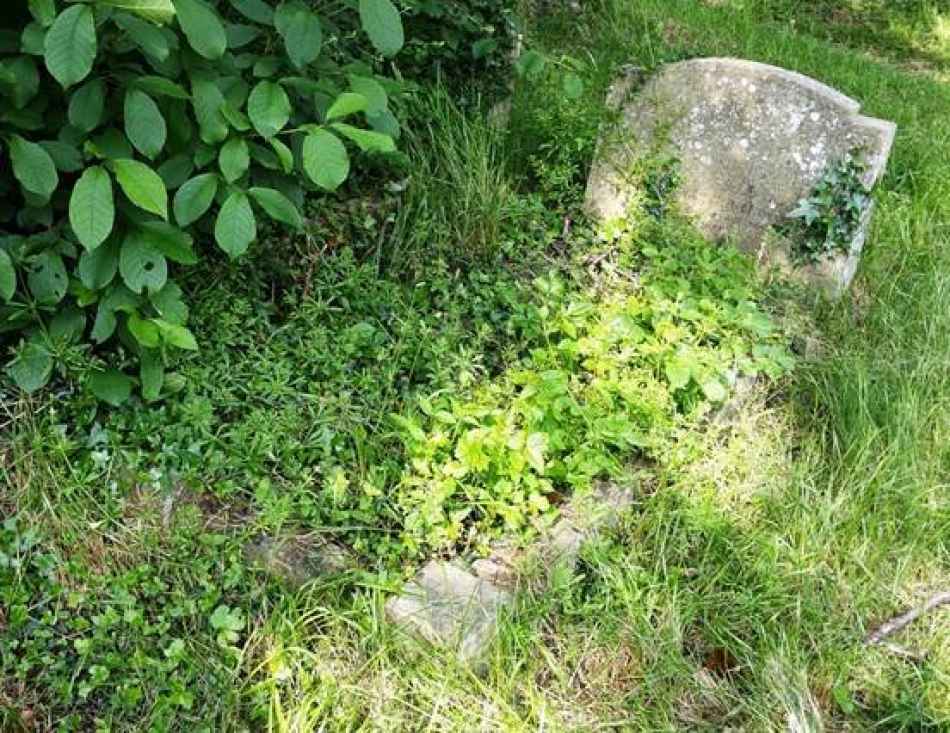
Leslie is commemorated on the headstone in Rectory Lane Cemetery marking the grave of his parents; “Also of Pte. Leslie Goss R.A.S.C., killed in action at sea whilst a P.O.W in the Far East, 12th September 1944, aged 27.” He is also commemorated on the Singapore War Memorial in Kranji Cemetery as well as Berkhamsted’s War Memorial.


 View burial


 Personalities of the Past
 The Fallen of WWI in Rectory Lane Cemetery
 Memorial Symbolism
